








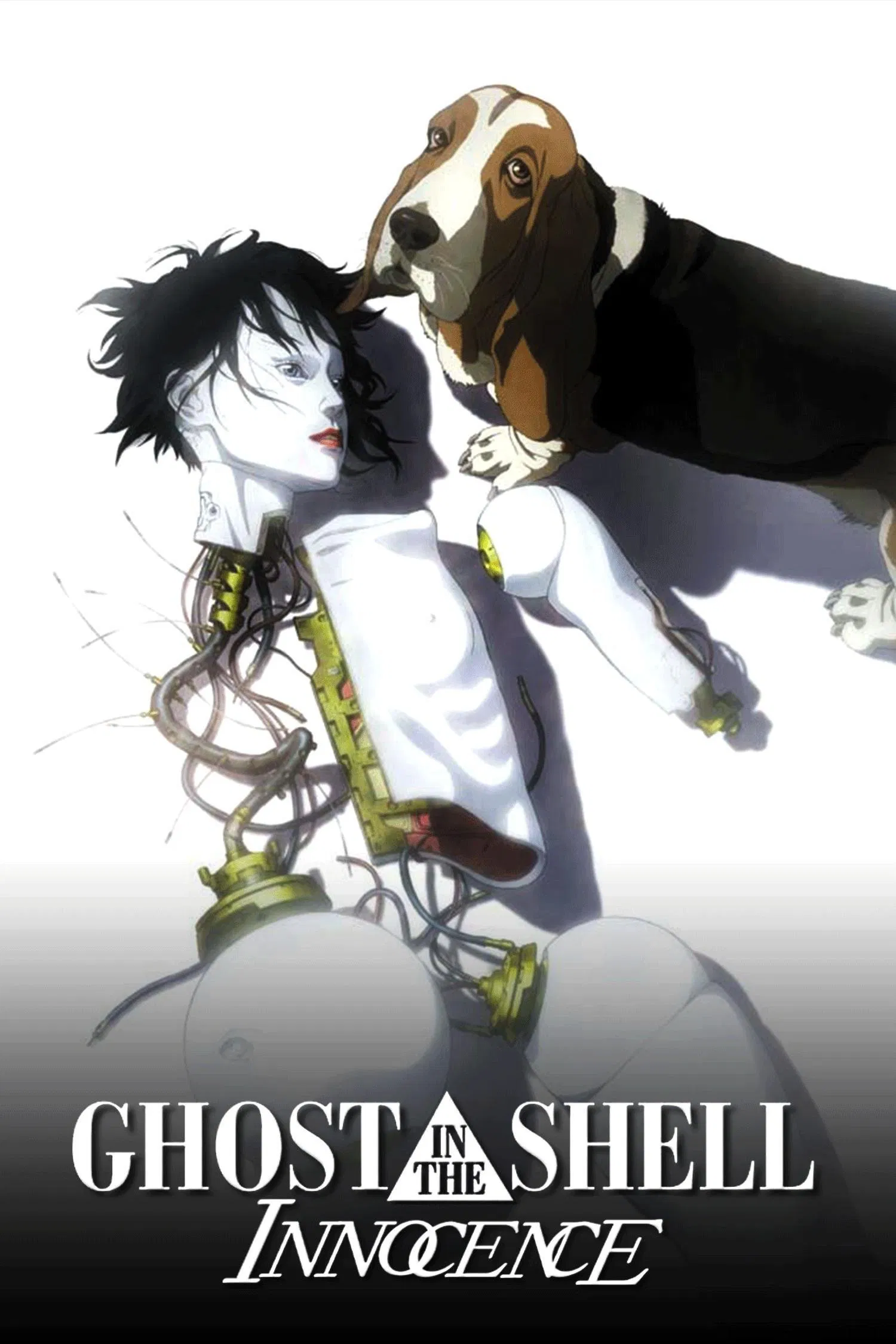
Name(s): Ghost in the Shell 2: Innocence / Koukaku Kidoutai 2: Innocence / イノセンス
Format: Movie
Studio(s): Production I.G
Release Date(s): March 6, 2004
Related: Ghost in the Shell (1995)
I actually enjoyed Ghost in the Shell 2: Innocence more than the original movie. That said, it’s one of the rare things I won’t argue is necessarily better, as my preference just comes down to the things Innocence values more.
To start with, I’m in awe of how elegantly Innocence operates as a sequel despite arriving nearly a decade later. While the first primarily focused on what defines a consciousness and by extension humanity, the second recalls these themes and expands them by further questioning the value of humanity to begin with, and the possible fallacies that arise when arbitrarily defining what deserves that distinction of “human.”
Innocence arrives off the heels of its predecessor as is expected of a sequel, but it doesn’t depend on them to tell its own original story. The continuity merely enhances the meaning of everything in it. An ideal handling of a sequel where they easily could have banked on fanservice derived from the status of the original. This is another worthy supplement to the franchise on its own two feet.
We see the same philosophical themes that have pervaded Ghost in the Shell in all incarnations in Innocence, but once again in a new context assisted with new metaphors, and of course, a simpler but equally well-executed mystery thriller that’s enjoyable on its own merits. This blend of humanism with the series’s lovable regular cast of characters, time-approved tropes of suspense, drama, and action while delving into a deeper area of meaning are what have made the Ghost in the Shell franchise a near-universal hit. Even if the philosophical meanderings are a little much for you, there’s still a lot to be enjoyed.
While the original movie was more graceful, paced better, darker in art tone, and of course, more of a startling innovator for its time, Innocence tops it with greater characterization that expands past Motoko Kusanagi and reminds us that Section 9 is a team, not an individual. This new focus on the rest of the cast has no doubt a lot to do with Stand Alone Complex‘s success in making Batou and Togusa fan favorite characters as well—and they deserve to be, so I couldn’t be happier about a movie primarily devoted to them.
Having started with Stand Alone Complex, I’m also more at home with the similar visual style displayed in Innocence. Since this is a movie, the budget is fatter, and the animation and high-tech environment is even more beautiful than it’s ever been. Every single background is just unbelievable and invites endless staring. This is what Blade Runner wanted to be.
Leave a Reply