






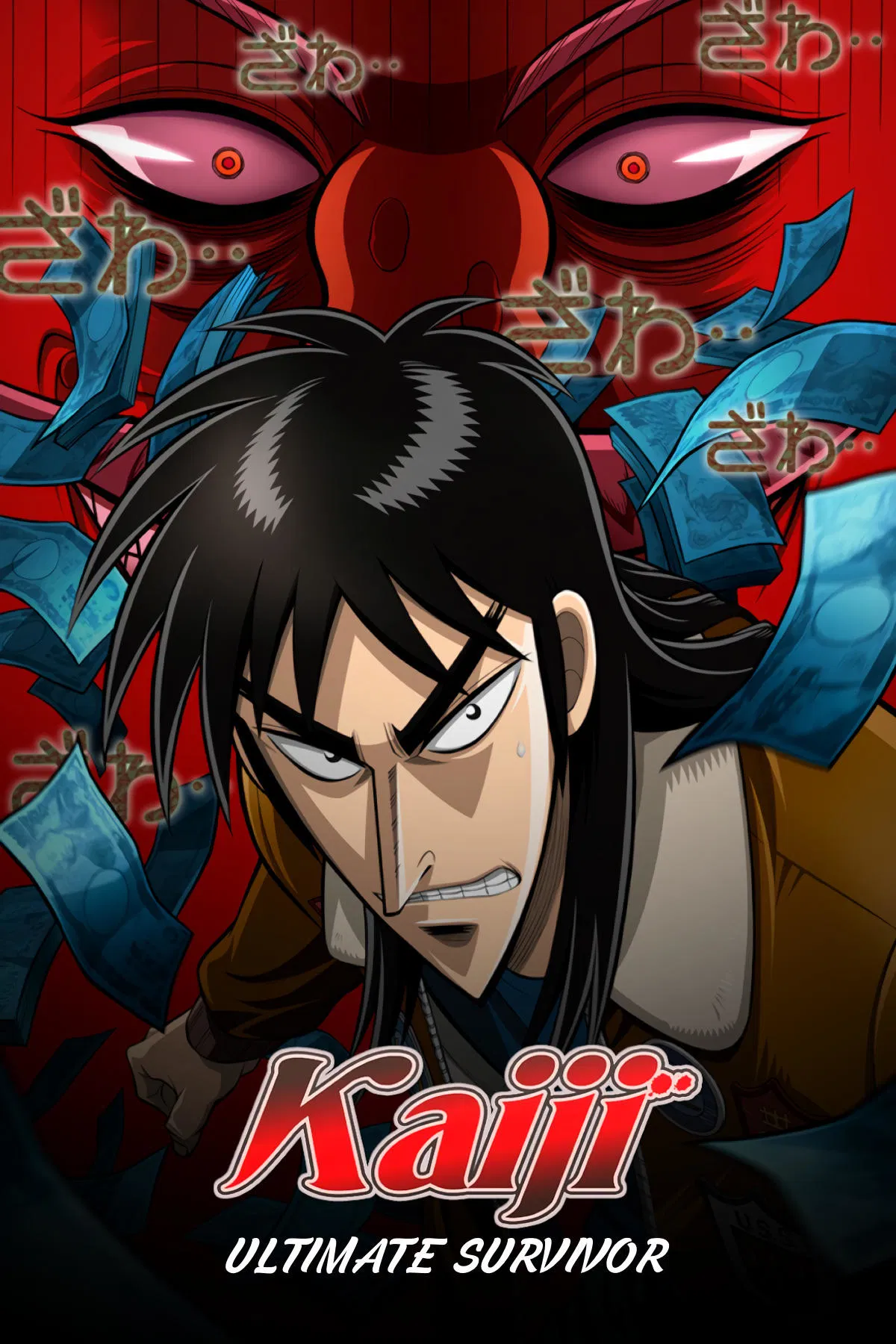
Kaiji: Ultimate Survivor
Name(s): Kaiji: Ultimate Survivor / Gyakkyou Burai Kaiji: Ultimate Survivor / Tobaku Mokushiroku Kaiji / The Suffering Pariah Kaiji / 逆境無頼カイジ Ultimate Survivor
Format: TV series (26 episodes)
Studio(s): Madhouse
Kaiji: Ultimate Survivor sees Nobuyuki Fukumoto pushing his talents shown in its spiritual ancestor manga/anime Akagi to new levels and new directions. In addition to being another series that places an unlikely young man in extremely dangerous gambling scenarios, Kaiji introduces some sly social commentary on the constant battle between the spirited working class and the steely monolithic bourgeois.
Kaiji Itō is a schmuck defined. The young man lives in poverty and is saddled with debt that he slowly works off in his average dead-end job. He just can’t catch a break, but when we see his questionable characteristics such as stealing expensive car ornaments we also wonder if he really deserves one. In any case, Kaiji is contacted by a Teiai Corporation agent who notifies him that a loan he co-signed for an old friend has accumulated an outrageous amount of debt that he’ll only be able to pay off after a lifetime of slaving away at his job.
The agent Yūji Endō coyly encourages Kaiji to board the ship Espoir for a night of gambling and a chance to earn his freedom from debt… or land himself into doing manual labor for the Teiai Corporation for the rest of his life. With his hands tied Kaiji accepts this all-or-nothing chance at freedom and joins the Espoir among many other men in serious debt for a series of dangerous games at the amusement of the omnipresent upper class. Though placed in many twisted and seemingly hopeless situations, Kaiji discovers that when his life is at stake within him awakens a surprising cleverness and affinity for mind games, a skill that had otherwise always eluded him before.
From this set-up Kaiji is immediately established as a much more empathetic character than Akagi. Though Akagi was a cold, merciless genius devoid of any flaws in his character when it came to what mattered in his manga/anime, Kaiji is much of the opposite. Kaiji is not a cool daredevil everyone secretly wishes to be, but a complete loser that everyone wants to avoid being. Aside from his brief moments of inspiration he is shown as short-sighted and naive, and these aspects are taken advantage of by other people throughout the entire series repeatedly.
Yet despite this, or perhaps because of this, it’s impossible not to root for Kaiji. He maintains the interest Akagi generated in that you want to see how he’ll get out of the terrible situations he puts himself in, but the outcome matters much more this time around because you don’t want to see him fail. There’s also an actual possible risk of failure in Kaiji: Ultimate Survivor as well, since his character flaws make him prone to many mistakes throughout the series unlike the precision perfect Akagi. Kaiji can be an utter jerk but he’s as equally capable of being compassionate and a hard worker that doesn’t give up when he sees the end in sight.
He’s down on his luck, but only because he wants the most painless way through life. Is that really so wrong? For many viewers, Kaiji is us. He’s pulled and trapped into unfortunate situations that he doesn’t really deserve to be in. Though mocked continuously by the upper-class villains in his series for not thinking of his future, perhaps Kaiji knows better than them that life’s too short for all the suffering.
Naturally, Kaiji: Ultimate Survivor also benefits from not being focused on Mahjong. The series features a variety of games with their own rules to keep the level of interest sustained, and there’s no prior knowledge required to enjoying the impressive tricks Kaiji and others pull to succeed. Fukumoto does a great job at choosing several types of games we’d never expect or know about as well, making it more fun and less predictable to see how these games will play out. Fukumoto remains as excellent a sports commentator as always, with the narration constantly supplying clever metaphors that dramatically describe every development that arises and intensifies them to new heights.
On the other hand, the narration is also occasionally one of Kaiji‘s weakest parts, as there tends to be far more exposition than what is necessary when the narrator explains what’s going on to the viewer right after the viewer just saw it happen. The narrator’s tendency to drag on about whatever’s happening is a transparent attempt to let the suspense build, but because this blathering is an obvious contrivance and adds little or nothing to the proceedings, it isn’t an acceptable way to do so, and it’s simply extremely annoying at inopportune times.
The art and animation department has had some more funds put into it since Akagi. The cels are crisper and the colors really pop, which aids Kaiji‘s transition from Akagi‘s neutral color themes to something more generally varied. Fukomoto’s long-nosed “tengu” character designs are as distinctive as always, though in Kaiji he uses the straight pointy noses much less often. Regardless of this, Fukomoto’s naturally unglamorous character designs give Kaiji the same gritty pulp feeling that Akagi possessed, supplying a good complement with the clear art and bright colors that allows viewers to take what they see more seriously despite the entire series relying on a hyperbolic tone.
This is a thriller, after all. Despite Kaiji regularly featuring diabolical set-ups and characters, the sheer ridiculous tone of the narration and art assures that the mood never gets out of hand, and this allows the series to maintain a startling balance between the deathly serious and the laughably absurd. Kaiji: Ultimate Survivor is a truly wild ride, but what sets it apart from simply being a junk food thriller is the sheer amount of personality and charisma that is laid on top of it. With a second season to eventually follow, Kaiji: Ultimate Survivor would continue building its mountain of suspense to unseen levels, and neither season should be missed. Oh yeah, and the electro-rock music score is great too.
Kaiji: Against All Rules (2011)
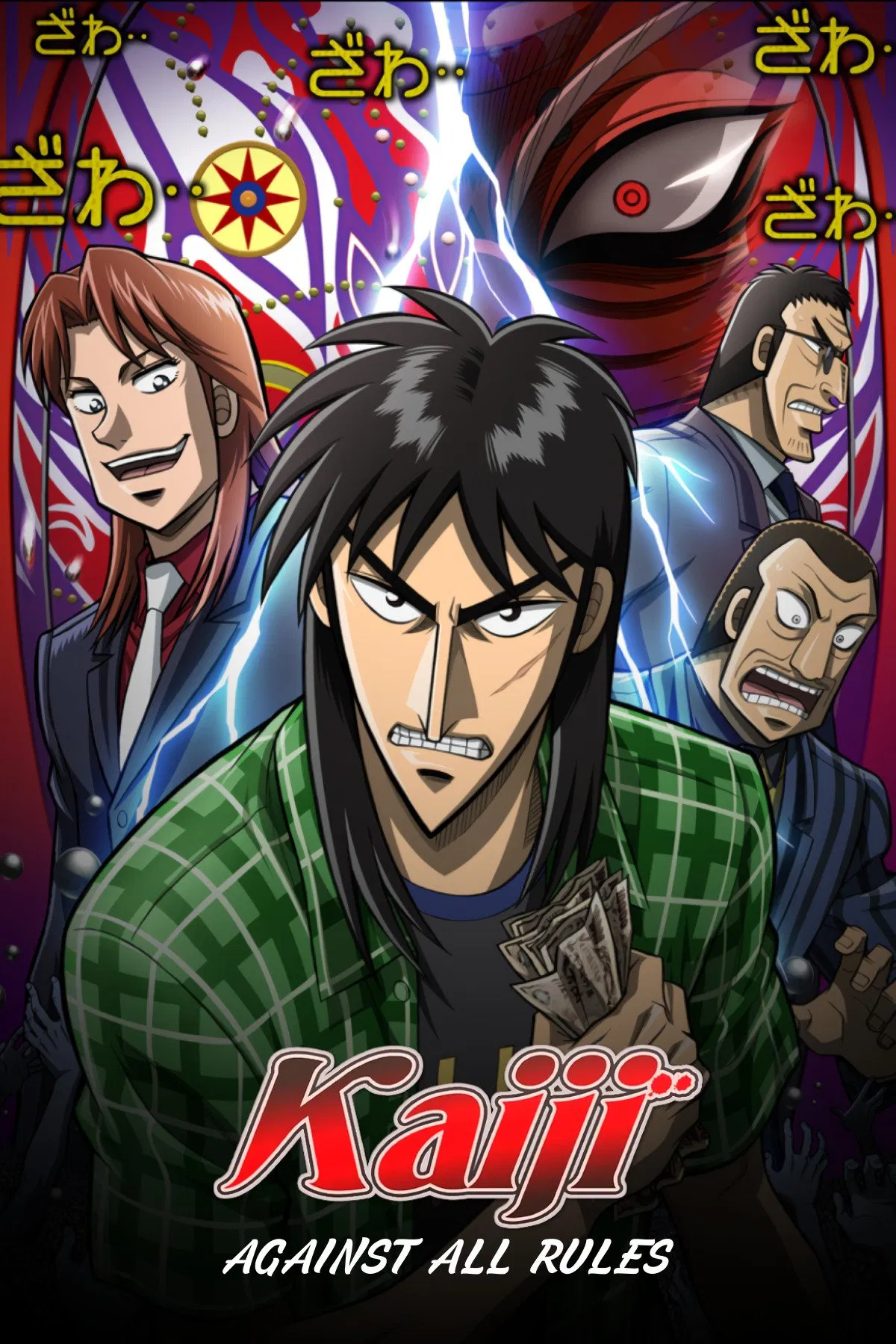
AKA: Gyakkyou Burai Kaiji: Hakairoku-hen / Gyakkyou Burai Kaiji S2 / The Suffering Pariah Kaiji: Backslide Arc / 逆境無頼カイジ 破戒録篇
Format: TV series (26 episodes)
Studio(s): Madhouse
Published: December 29, 2013
I already wrote a review for Kaiji‘s first season, and I recommend reading that first as it sums up most of my feelings about its similar second season as well.
Apparently this season pissed a lot of people off during syndication because of how long they kept dragging out the Bog arc. I can kinda see why, but since I marathoned it, I basically avoided that. Though like everyone, I’m kinda bummed there was no third game.
A lot of people say Kaiji‘s second season is weaker than the first. Some say it’s not worth watching it all. They’re both wrong. Kaiji follows up its predecessor in the way such an anime does: it raises the stakes, lowers the odds, and Kaiji manages to overcome the hurdles in more grandiose, satisfying ways than ever before.
The first game is great, since we see Kaiji in a new setting while in his absolute weakest form, and the final outcome is unbelievably personally satisfying when he seems so utterly trapped and has to win, yet again, through outsmarting his opponents rather than getting lucky.
The Bog, though: that’s where the second season shines. The suspense is dragged out to levels I’ve never seen anywhere else, and you can feel the anxiety building in every single character as if the entire room is about to erupt. Nobuyuki Fukumoto’s descriptions are as incredible as always, likening the Bog to a gigantic monster that is slowly worn down in a battle of ultimate attrition and tactics by the warrior Kaiji. It’s not man against man this time, it’s man against a giant steel monster, and it’s a war instead of a mere battle. Exhilarating, and tops anything from the first season.
Leave a Reply