








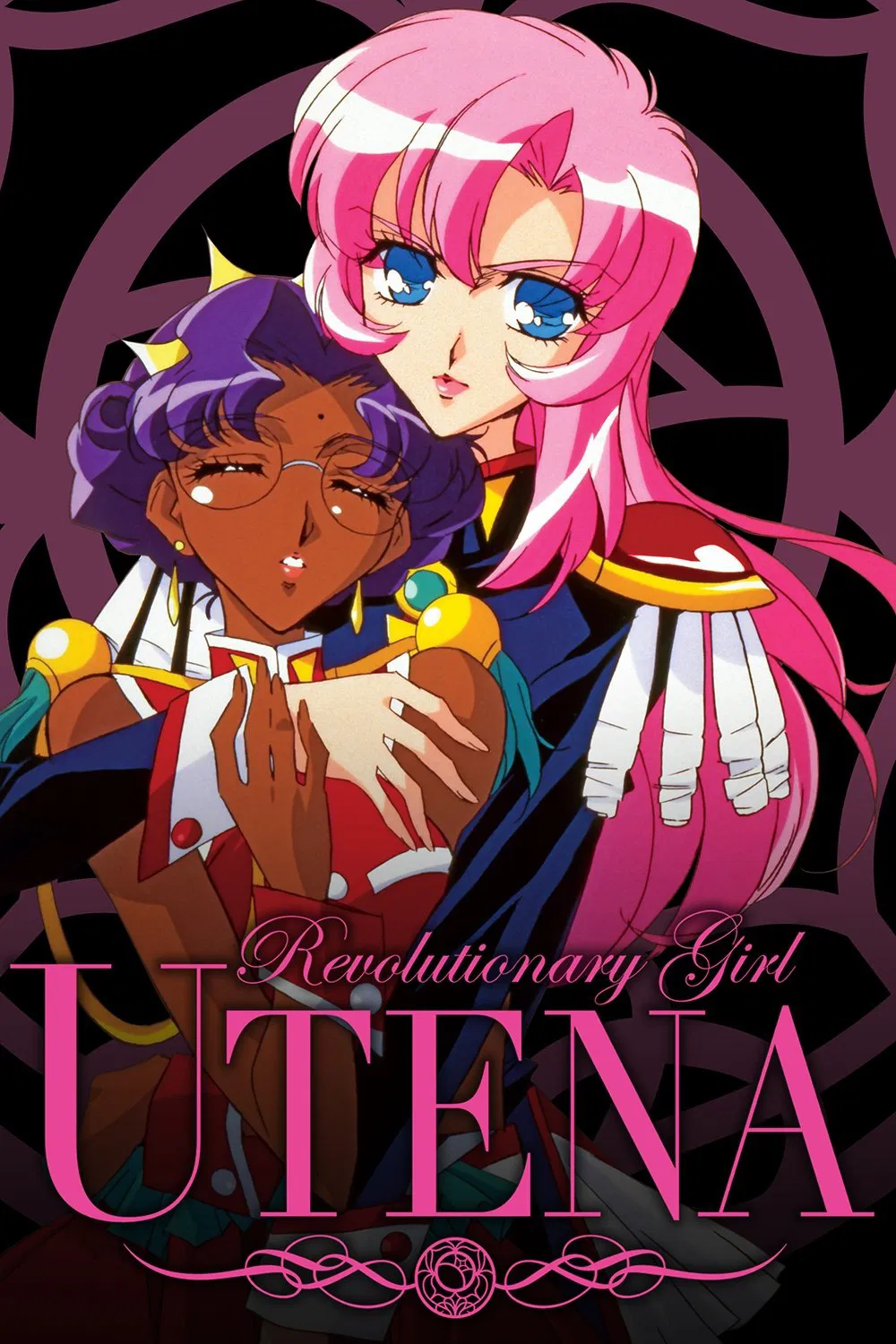
Revolutionary Girl Utena Review
Name(s): Revolutionary Girl Utena / 少女革命ウテナ
Release Date(s): April 2, 1997 – December 24, 1997
Studio(s): J.C.Staff
Something that bothers me about this series is its structure. I tend to dislike anything extremely formulaic or symmetrical structure, and Revolutionary Girl Utena fully indulges in these. This results in some slow pacing of the bad sort. It isn’t for the series to breathe or gain potency. I can only see it as padding.
The Black Rose arc contains the bulk of these problems. Its storyline is nearly stand-alone and unrelated to the established characters. Any connections are flimsy and vague, getting in the way of personal investment. Recurring characters often go over the same themes and character development as earlier episodes, and in the same exact order.
This formula repeats for the final arc of the show. While more connected to the rest of the series, the repetition spaces character arcs and thematic developments apart so much that it dilutes their growth’s impact. Connecting and appreciating the nuances of a student council member’s growth becomes difficult and dull. Their relevance and momentum are constantly interrupted by a slew of unrelated episodes. It can make the show feel schizophrenic at times in its themes and characterizations.
Too much distance can make these evolutions either unbelievable or weak. There is no particular reason nearly every single episode needs to focus on a specific character. These arcs could be more evenly spread, interweaving throughout the series. Episodes should contain multiple segments of different characters’ storylines, resolving them over a longer period. Their issues and philosophy ought to linger. They shouldn’t fall off only to resume 10 episodes later. It’s a more graceful and cohesive method of storytelling if you want all of your themes to tie together like Revolutionary Girl Utena clearly does.
Inconsistent Tone in Revolutionary Girl Utena
The show’s few comedy episodes are honestly just awful. I admit I’m not really in the market for that sort of genre, but neither is the rest of this show. Utena‘s frequent dips into convention are necessary in making its subversions impactful, but the show’s indulgence in shojo and high school tropes don’t conflict with its unique fantasy. It’s believable with the story structure and doesn’t contrast with it.
These full-on engagements with Revolutionary Girl Utena‘s source material are not only unnecessary because of the formerly mentioned implementations, they contradict the cleverness that came with them and the show in general for the gain of nothing that benefits the surrounding material in any substantial way. These episodes are literally out of place and unnecessary and further drag out a show that already has problems roping all of its material together over its extending length.
Leave a Reply