






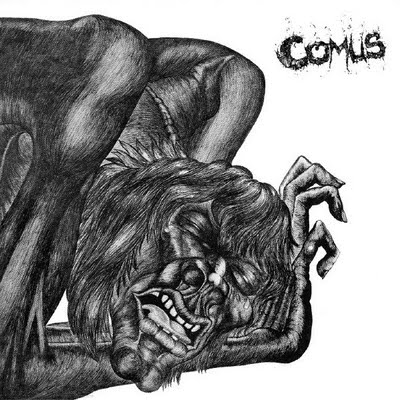
It’s about time I say something about First Utterance. It wasn’t that long ago I first heard it, but I was immediately entranced by it. I called a favorite upon first listen, and every subsequent listen has left me impressed with a different aspect of every song. It’s one of those albums that shocks you and just keeps on giving. It hasn’t stopped giving yet.
I’m not going to get too wordy or elegant with this one like I tend to do with a lot of my longer reviews, I suppose (I wrote this before finishing the rest, apparently I’m a liar). It’s like 12 AM where I am right now, I’m tired, this album is amazing, I want to express my love for it, here goes.
Viewing First Utterance in the context of the year it was released (1971) is fucking mind-blowing. There was nothing around the time that even came close to sounding like it, let alone daring to be as adventurous as it was. To my knowledge, there has been nothing since First Utterance that has sounded identical to it. Probably because any and all influence from such an original album would be incredibly obvious, such as with folk acts that have embraced the similar “dark” tones of the album, the most well-known being Current 93 and perhaps some other neofolk artists.
Maybe nobody can even bring themselves to attempt to upstage First Utterance. It would certainly take a lot of fucking effort. The musicianship throughout this album is astounding right down to the manic, shifting, deranged vocals of Roger Wootton, and it would take a lot of effort and passion to match that technical prowess which a lot of people wouldn’t be willing to put in.
Plus, I figure a lot of people simply can’t bring themselves to play and sing passionately about songs that describe in detail, with no subtlety or remorse, subjects such as rape. And this is now, mind you. This album came out in 1971. The guts these guys must have had to play their damn heart out and create something so avant-garde and out of the common public listener of the time’s understanding is admirable. They had to have known almost nobody at the time, music press or otherwise, would be willing to accept an album so musically and thematically strange. They had to have known they were likely going to make no money off of this.
Maybe they did know, figuring the album would eventually be discovered off its true unique merits in time. Who knows what this group’s motivation was for performing this album (maybe I should read an interview)? Lou Reed was apparently a big deal for writing mellow songs about people buying drugs. Comus were writing songs about people being raped, and they sounded excited about it.
So, the rape. The first track, “Diana”, immediately lets you know what you’re in for (or so you’d think): an out of tune violin (uh, I think) leads the song as Roger Wootton immediately narrates a lustful man who seems to be stalking the titular girl through a forest. ” His darkened blood through bulging veins.” He’s talking about his cock there, is my point, you see. Wootton is a very good storyteller here as he is through the entire album, singing in a bit of whisper, very quietly as to not alert Diana about her pursuer. Bobbie Watson chants behind Wootton with her feminine yet equally ominous voice.
Not long after, the pursuer gets on top of Diana as she attempts to kick the deranged man away to no avail (“Diana Diana kick your feet up/Lust bears his teeth and whines/For he’s picked up the scent of virtue/And he knows the panic signs”). Roger Wootton chants this verse, portraying both the desperation of the rapist and Diana trying to escape.
As the pace of the narrative increases, so does the music itself. Bongos begin playing in the background to heighten the tension and slowly become faster and faster, matching the rising heartbeats of both characters in the story. Roger Wootton begins chanting even faster with Bobbie Watson backing him: “Lust cries running with his eyes the white-clad figure fleeting/Mud burns his eyes but desire burns his mind/Fear in her eyes as the forest grins through the steaming woodlands/Lust now his destroyed with enmity disarmed.” Diana manages to kick mud in the assailant’s face though it shows no sign of stopping him.
And then—a fast-paced bongo solo. A dang bongo solo. Absolutely perfect. You can practically hear the chase, envision it even at this point, as Diana and her pursuer’s feet stamp through the forest ground.
Diana’s name is then repeatedly chanted as if Wootton and Watson are entranced by the disturbing scene. The “kick your feet up” verse then repeats twice with Wootton yelping like a madman all the while, as Diana’s name follows again, chanted in a low growl one last time into the dark, echoing forest. It seems there’s no hope for Diana’s escape…
First Utterance is an entirely unapologetic album throughout. It breaks music conventions left and right and relishes in its complete madness. And that is only the first song. The shortest on the album, no less (with the exception of the delirious outro, “Bitten.”)
Do I even dare take on the task of describing the rest of the songs? The eerie and beautiful female-lead track “The Herald,” the psychotic torture of “Drip Drip,” the abusive control described by the being’s dedicated song, “Song to Comus,” a man’s haunting journey to his own hanging in “The Bite,” or another insane man’s claustrophobic reaction to his insulin shock therapy in “The Prisoner.” All in one groundbreaking, timeless album. Some day, I’ll go into those tracks as well, but for now, I think I’ve made my point about why I love this album so much.
First Utterance is superbly performed, every instrument including the vocals is played in relation to the lyrics that dictate unusual stories of the grim and macabre. It draws you into its dark, dangerous world with no mercy. Yet the madness in the instrumentation and Roger Wootton’s vocal delivery is so real and impassioned that it’s completely infectious despite the disturbing themes throughout the album. You want to chant along with Wootton and Watson, you yourself becoming so completely enthralled with the eccentricity that you begin to take delight over the horrors and insanity perpetuating the album’s themes and music—and that’s when you know First Utterance has its hands around your throat. And it’s not going to let go.
Leave a Reply