








Review
Killing Joke‘s mission statement when they first banded together, according to lyricist and vocalist Jaz Coleman, was to “define the exquisite beauty of the atomic age in terms of style, sound and form.” “Exquisite beauty,” of course, being ironic, as it would be the last phrase anyone other than a maniac would come up with to describe the atomic age and by extension, the music of Killing Joke.
Then again, Killing Joke are those maniacs.
Killing Joke’s first album marches through abandoned city streets, waving a welcome banner for Armageddon. The bleating siren-like synthesizers and clockwork riff of “Requiem” signal the countdown to a world consumed by greed, hypocrisy, death, destruction—all of mankind’s ugliest, normally despised traits. Yet, that’s what Killing Joke would revel in and be fascinated by for the majority of their career.
After the stunning, fitting opener, “Wardance” immediately peaks the album’s intensity with a punky dance number complete with threatening, snarling vocals and a tribal-chanted chorus that evokes furious images of primitives dancing around a fire, howling for society’s downfall.
The excellence of the first two tracks ironically ends up revealing the album’s weakness: it’s a little unbalanced. “Requiem” and “Wardance” aren’t simply highlights on this album—they’re highlights of the entire post-punk scene. They were anthems for a new decade and movement in music, a new ethos, and practically a manifesto to society in the way tamer punk bands of the ’70s couldn’t compete with. They’re major statements that the rest of the album simply can’t keep up with after the force of the album is toned down for the more repetitive “Tomorrow’s World” and the instrumental “Bloodsport.”
That’s not to say that the rest of Killing Joke’s self-titled lacks intensity, because that simply isn’t true. Rather, it’s relatively less intense, because the album starts with its climax. Though one could pose an argument for “The Wait” being the album’s climax, coming right in the middle with Coleman’s loudest vocals on the record as he wails the track’s title during the chorus as if trying to wake up an entire sleeping city.
Lyrically however, “The Wait” just doesn’t carry as strong of imagery as “Requiem” and “Wardance.” “Complications” is another strong highlight, a track that opens with one of the most violent riffs on the album, but ends up revealing its true nature as a bouncy, danceable new wave-esque boogie in its chorus.
Outside of these highlights, Killing Joke remains a strong album from front to finish for the sheer cohesiveness of its themes. Everyone knows (or should be aware) of the impact this album had upon rock music with its mechanical rhythms and cold synthesizers being a forerunner to industrial rock.
However, there’s even more to be said for their achievement in getting synthesizers to perfectly complement rock instrumentation, whereas the two were often before separated, or had one instrument taking prevalence over the other. On Killing Joke, the synthesizers and guitars work hand-in-hand, neither approach ever sounding out of place or contrived. Further experimentation can be found in the vocal samples hidden in the background of “$.O.3.6.” To put it in terms these pagans would understand, it’s phenomenal alchemy.
Killing Joke were also influential in conveying uncommon themes in rock music. This debut album carries more anger than the often playful and juvenile punk albums of the ’70s, and more violence and pessimism than almost any rock album beforehand—a true flagship of the post-punk movement that would join bands like Joy Division in showing the depth of apocalyptic intensity that rock music could portray.
Listening to Killing Joke’s self-titled now, it’s still a shockingly unique record in the entirety of the post-punk movement. It’s a startling thing to realize when you consider the album’s 1980 release year, before post-punk was a distinctly established scene. No other post-punk band could capture the genuine intensity that Killing Joke did in their first album. Although metal bands could be louder and heavier, none of them had the amount of venom that Killing Joke had—no other band of their time was this mean, this threatening.
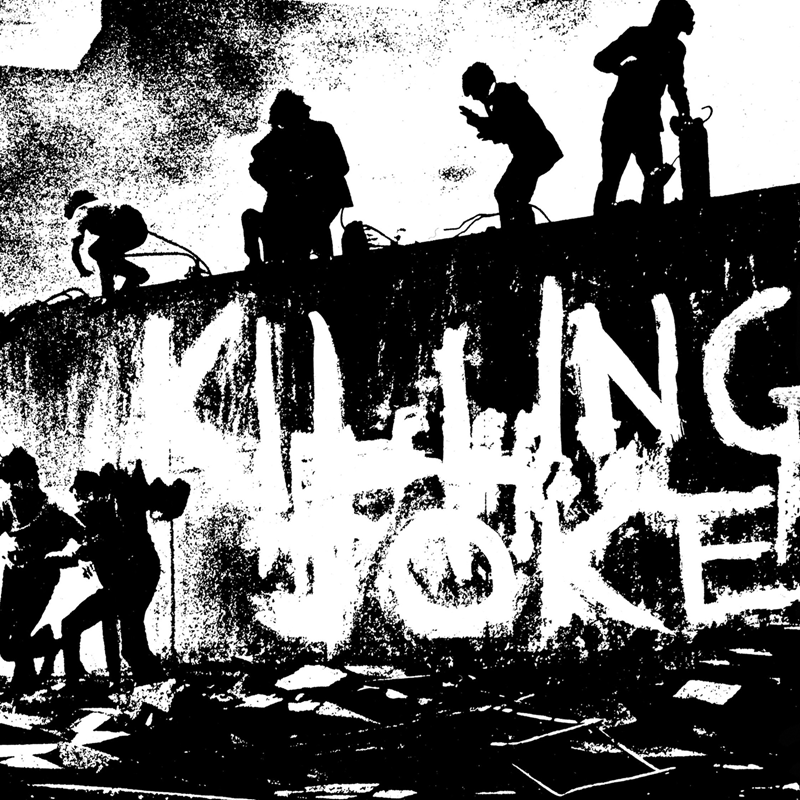
Also, the album cover kicks ass, one of the best of all time.
“This is music to march to…
It’s a war dance!“
Leave a Reply