








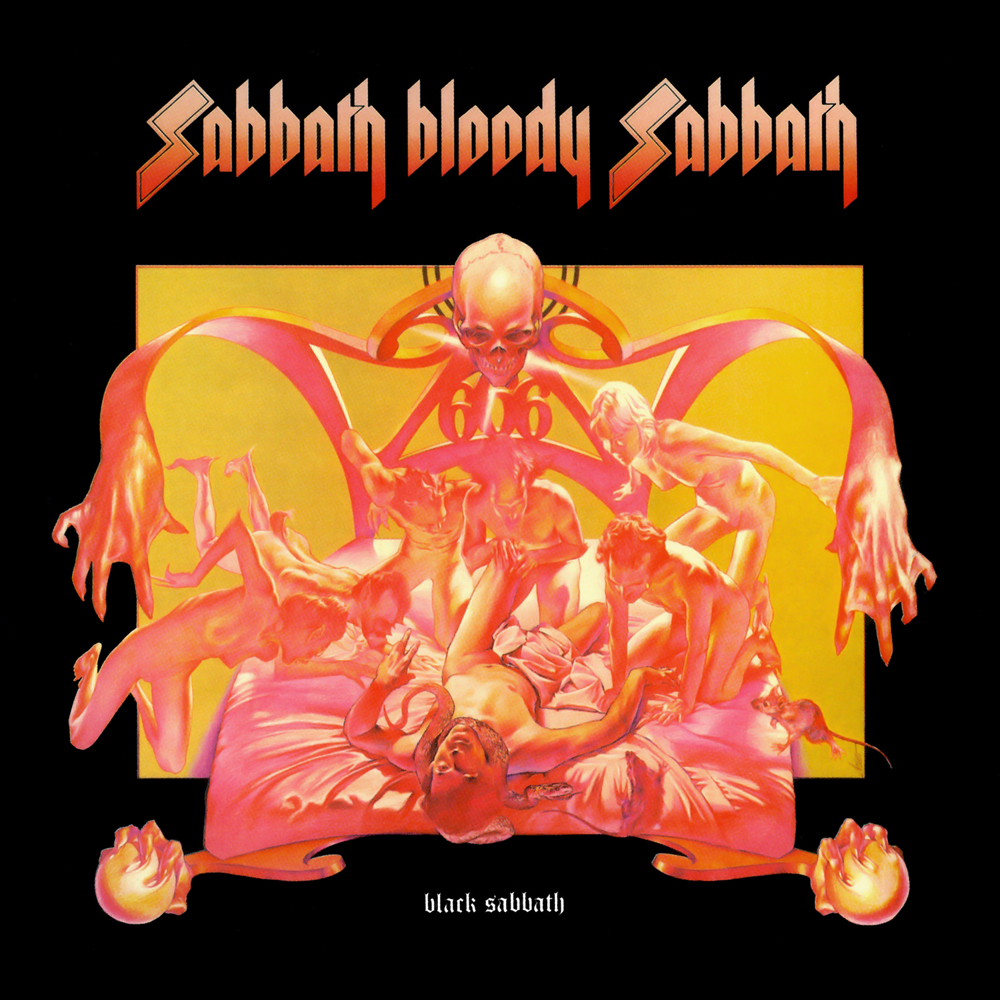
Sabbath Bloody Sabbath is Black Sabbath‘s greatest album, yes indeed-y. Basically, Sabbath Bloody Sabbath shows further experimentation with the band’s sound that we saw the beginning of in the often haphazard Black Sabbath Vol. 4. This time around, Black Sabbath apply their new ideas more sensibly and they always fit in perfectly with the songs, never clashing with any classic Black Sabbath sounds and never hurting the album’s cohesion. As if being the progenitors of heavy, doom, and sludge metal wasn’t enough, Black Sabbath would lay the first seeds here of what was to become progressive metal.
The album starts out with the title track which may very well be the best song here. “Sabbath Bloody Sabbath” shows off the band’s new sense of dynamics as the song opens typically with a killer doomy riff par for the course for Iommi’s peak songwriting that’s joined with Ozzy Osbourne’s usual vengeful vocal. Not far in however, the song lets you know you’re in for something different this time as it abruptly shifts into a softer tone, with Ozzy following suit in his vocals and Iommi’s heavy electric guitar being replaced with a sensitive acoustic guitar.
Then, when you think the song has totally revealed itself, just past the halfway point Iommi, from a solo, leads into an entirely different, even heavier riff that leads the rest of the song with Ozzy’s vocals sounding more enraged than ever before. The last minute of the song ends with another new riff, galloping faster than any other part of the song to the finish line before suddenly fading and fizzling out in a fit of psychedelic weirdness.
Lyrically, “Sabbath Bloody Sabbath” is the usual for Black Sabbath: a song about alienation and wanting revenge against those who shunned you. It’s similar to Iron Man especially, but still deserves praise for Black Sabbath at the time being the only outlet in music for these kinds of themes. “Killing Yourself to Live” shows some possible self-consciousness from Geezer Butler as the song is a commentary about people who abuse substances to get through life, few better examples being the band themselves as drugs and alcohol abuse would be the number one cause for the group’s decline in songwriting ability, friendship, and cohesion as a unit that would eventually cause them to break up.
“A National Acrobat” is another highlight, but unfortunately uses the exact same vocal melody as “Sabbath Bloody Sabbath”‘s verses. However, it does have a unique riff and the psychedelic noodling in the solo after the midway point is instantly lovable. The last segment of the song picks up immensely with some fast guitar work that actually has a sort of upbeat tone to it.
Which leads a bit into “Fluff”, the album’s only instrumental. “Fluff” is a chipper acoustic instrumental joined only occasionally by piano. It is perhaps Black Sabbath’s greatest instrumental, but it’s drastically out of place on this album, and even keeping it it would have had a much better spot being placed after the heavy three-punch of “Sabbath Bloody Sabbath”/”A National Acrobat”/”Sabbra Cadabra” as a nice refuse before the juxtaposition of the indicting “Killing Yourself to Live.” Really, this is the only significant problem I have with “Sabbath Bloody Sabbath.” “Fluff” where it is now hurts the album’s flow, despite its quality as a singular instrumental track.
“Sabbra Cadabra” is tied for the title track as my favorite off the album. The song begins as a truly heavy metal rock-and-roll romper about a man in love with a woman that seems to be a direct remake of the often-mocked “Evil Woman” on the band’s first album with the force multiplied by ten. Shortly in the song a synthesizer of all things (played by none other than Rick Wakeman of Yes) is laid on top of Iommi’s riff for stunning effect as it complements the chords perfectly. Ozzy’s vocals soon come back in with a strange studio effect on them that makes him sound more genuinely demonic than he ever has before. A bluesy piano is the last to join this party, and like everything else on the album it slides in smoothly and fits perfectly. “Sabbra Cadabra,” much like the title track, shows that Black Sabbath have learned the power of dynamics within a song and how to control where you take the listener, and it’s the most exhilarating trip on the album.
“Killing Yourself to Live” doesn’t have the new sonic palette of the previous tracks but it nonetheless is a classic Sabbath song—an album highlight with great instrumental performances all around and strong hooks. The song doesn’t change much until the last minute or so where it again picks up the speed and references again the root rock and roll spirit that surfaced on “Sabbra Cadabra.”
“Who Are You?” is the only song on the album driven by a synthesizer, more specifically Ozzy’s Moog synthesizer that he bought before the album despite not knowing how to play it. It’s a bit of a silly song in retrospect (like everything a Moog was ever played on), but it’s lovable in its cheesiness and the piano that joins later on in the song almost makes the track sound as if it’s some kind of overture for a heavy metal epic—and synthesizer overtures would become an eventual mainstay on progressive metal albums, so at the very least this is another historically pioneering song even if it isn’t a highlight on its own. “Who Are You?” was smartly made the shortest song on the album.
“Looking for Today” returns to the guitar-based format, but it’s Bill Ward’s uptempo drumming that’s the highlight of the song this time, as well as the flutes that join Ozzy’s vocals in the chorus. Tonally, this is the most upbeat-sounding song on the album. Ozzy shouting the title of the song sounds optimistic even, but lyrically the song is critical of the person it’s addressing, someone whose life is passing them by because they only live in the present.
“Spiral Architect” picks things up again with one of the best songs on the album, opening with a delicate acoustic guitar before the electric chimes in. The song’s chorus sounds twisted with the violins and Ozzy’s out-of-tune vocals. It’s a sweeping finish to an excellent album and a good summary of the elements that make Sabbath Bloody Sabbath Black Sabbath’s crowning achievement.
High Point: “Sabbath Bloody Sabbath,” “Sabbra Cadabra”
Low Point: “God knows as your dog nose”
Leave a Reply