






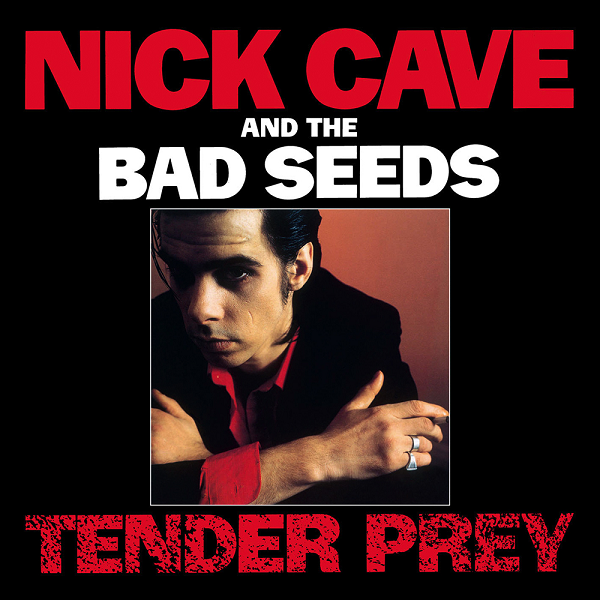
It has to be one of the greatest crimes (heh) in music that The Mercy Seat is not Tender Prey’s closing song. The Mercy Seat is narrated by a man about to be executed in the electric chair, which he alludes to as the throne of God, believing he’ll go to Heaven as a truly innocent man in death. It’s only with the final line of the song, “but I’m afraid I told a lie”, that it’s revealed our narrator is not the innocent man he’s lead us to believe.
This 7:14 minute epic is clearly the best song Nick Cave has ever written. The Mercy Seat embodies an intense, oppressive feeling as the music escalates while the narrator walks closer and closer to the electric chair to meet his fate, the increasing number of instruments growing louder and louder as they’re played with more aggression. We can feel what the narrator feels as he approaches death, with hairs standing up on the back of his neck and anxiety amplifying with each step closer to the electric chair, everything only finally coming to a slow yet sudden stop as the life is quickly drained out of both the narrator and the music of his mind as he is executed. It’s truly an ambitious success and there’s not much like it in the rock vocabulary.
So why the fuck is The Mercy Seat the opening track of all things? It’s a song that symbolizes the end of something. Why does life go on with nine other tracks after it? Why would you start your album off with your best song that is darker than every other song and sounds like nothing else on the album and give your listeners an unreasonable standard for the rest of the album’s songs and a false first impression of the album’s tone? You don’t start a narrative off with the climax, and that’s no different for an album. Why. What. Why!?
It makes me sick to think about how The Mercy Seat isn’t the closing track. Literally, I just vomited all over my keyboard and it’s making it really hard to write the rest of this review because it’s doing that thing where the keys are all sticky and hitting one key makes all the keys around it appear so you have to delete the extra ones and leave only the key you wanted. What a hassle, and it’s all because The Mercy Seat wasn’t the closing track like it only should’ve been. God, I hope I’m next on Death Row; I don’t want to live in this world anymore.
The Mercy Seat is the only song of its type on the album, though that is certainly no sleight against the rest of Tender Prey’s quality, rest assured. To juxtapose with The Mercy Seat you have plenty of Nick Cave’s most beautiful ballads in Watching Alice, Mercy, and Slowly Goes the Night. Slowly Goes the Night being my favorite for both Cave’s sorrowful voice and piano, and the fast-paced drumming of Thomas Wylder – certainly unusual for an otherwise slowly paced mourner, and a fine example of the unexpected subtleties that make up Tender Prey’s songwriting. I also love the pounding R&B shuffle of City of Refuge and the lighter-toned Deanna. Up Jumped the Devil is a campy stomper with some surprisingly heavy lyrics about an unlawful man who claims to have been stalked by the devil his whole life up until the devil finally appears before him and drags him to Hell. It’s all in good fun though, like a night out on Halloween.
Oh, and don’t think I forgot about the three closing tracks. Sunday’s Slave has a great beat, Sugar Sugar Sugar’s Spanish acoustic guitar and ghastly backing vocals are irresistible, and the spiritual pseudo-hymn New Morning makes for a decent closer (but The Mercy Seat would have been better).
You may not expect it from a fairly direct rock album, but I highly recommend listening to Tender Prey through headphones or perhaps some kind of surround sound system. The album has a really theatric quality to it. You can easily envision Nick Cave dramatically stomping around on stage like he’s one of the ghouls narrating each of the 10 tales across Tender Prey thanks to Mark Ellis’s (credited as “Flood”) mix which gives Cave and the Bad Seeds’s vocals and instruments an echoing, hollow quality that makes it seem as though they’re performing in a large theater on a live stage, and it really adds to the unique character and fun of Tender Prey. Pay close attention to pick up some xylophones and harmonicas being played at the back of the stage, as well. Not quite your typical rock instrumentation. But my point is Tender Prey is not your typical rock album.
Tender Prey is an easy contender for Nick Cave and The Bad Seeds’s greatest album, its only competition being Let Love In.
The Mercy Seat should have been the closer.
Leave a Reply