








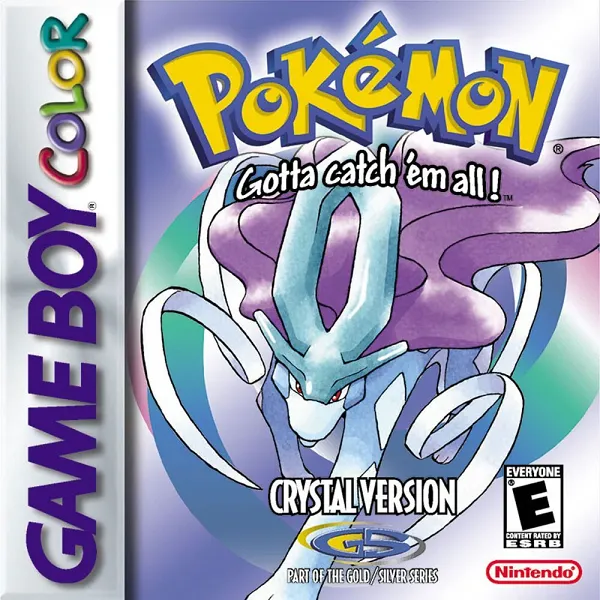
NAME(S): Pokémon Crystal / Pokemon Crystal / ポケットモンスター クリスタルバージョン / Poketto Monsutā Kurisutaru Bājon / Pocket Monsters: Crystal Version
PLATFORM(S): Game Boy Color (GBC)
DEVELOPER(S): Game Freak
GENRE(S): RPG
RELEASED: December 14, 2000 (Japan) / July 29, 2001 (North America) / September 30, 2001 (Australia) / November 2, 2001 (Europe)
Pokémon Crystal Review
Background
I never cared much for Pokémon Crystal‘s focus on Suicune. There’s supposed to be some implied equilibrium between the Pokémon depicted on the covers of the mainline games. The only third version prior to Crystal was Yellow, which featured Pikachu. There was never any mystery as to why Pikachu had that focus, and more justification would be provided upon playing it and seeing its allusions to the anime adaptation.
That I get. That I understand. But Suicune was of equal importance to its counterparts Entei and Raikou in Gold and Silver, which means some asshole at Game Freak chose to play favorites and elevate Suicune’s role in the story and background. An NPC in the game even remarks that Suicune has the closest connection to Ho-Oh, the legendary Pokémon that created the three beasts. How? It never does anything related to Ho-Oh. Why? It’s a darn water type, the intrinsic opposite of Ho-Oh.
Shouldn’t the closest be Entei, who’s not only another fire type but had received further recognition from his appearance in the third Pokémon movie? Ho-Oh revived/created all three of the beasts at the same time, so wouldn’t that imply Ho-Oh itself was playing favorites with those dead Pokémon? Ho-Oh is left to play the fall guy for some biased dickheads at Game Freak. It’s revisionist history, and I won’t abide by that shit. I will not be fooled.
Suicine may be my personal least favorite of the trio, but it was never why I didn’t pick up Crystal as a kid. Rather, I definitely wanted it for a time. I remember the first time I saw it. Probably some upper-middle class shmuck brought it in, and everyone was hovering around him as he played. He encountered a Geodude, and then it happened…

The Geodude moved.
Well, it more just opened and closed its mouth a few times, but still. The Pokémon itself was animated! The thought of a more immersive Pokémon experience was intoxicating. I was so excited that I bounced around the room like Daffy Duck until I had a heart attack and died. Then yadda yadda, here I am now. Really, being in poverty meant I could rarely get video games, so I probably didn’t want to “waste” it on a game that was mostly the same as one I already owned (Gold). But I couldn’t help but wonder throughout the years: what if?
Unexpectedly, I answered that question in October of 2024. I was messing around with my 3DS and checking out the Virtual Console games on offer. They were particularly accessible to me, and I saw Crystal was available. Before bed, I decided to just mess around in it a little for novelty’s sake. Then I kept playing. Now I’m over 80 hours in, having defeated all Trainers (including Red), picked up all items, did all in-game trades — you get the idea.
So, did my childhood self miss out on much from skipping Crystal. Well, no. Unequivocally no. People have long debated whether it was ever worth buying the third versions of a Pokémon generation, and that debate is only more stacked in favor of the “no” side the further back you go. Crystal makes more additions to the gen than Yellow did for its own, but that’s a damn low bar to clear.
Essentially, I was replaying the second gen Pokémon games again. A fine enough excuse — I never needed one to begin with, having beaten Gold multiple times. In the spirit of new experiences, I chose Chikorita to be my starter. It was the only one I had never fully completed the game with.
Meganium Maladies
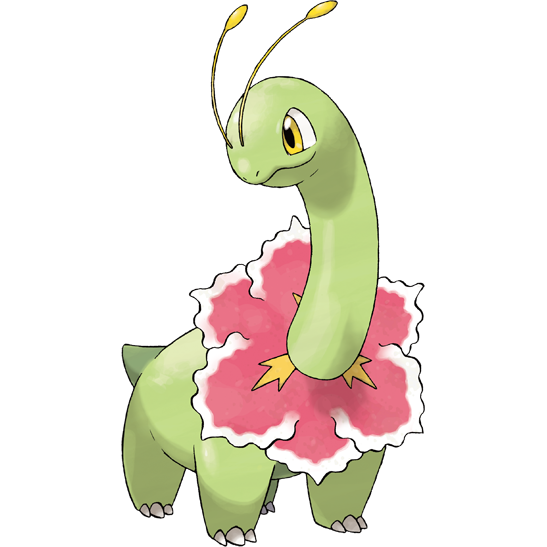
Holy shit. What a mistake. An enlightening one, at least, since it highlighted many of generation 2’s flaws in game design. I like the Chikorita line’s monster designs, but as a Pokémon, it was miserable to use. For one, it’s a Grass-type with split offensive stats, even though Grass is exclusively a special damage type in gen 2. This is a blessing in disguise, as while it cuts STAB, it allows Meganium to compensate somewhat for its complete lack of special-type moves.
Curious as to what non-Grass special attacks Meganium learns?
Here’s a list of all of them:
Yeah. There isn’t a single one. Okay, I’m fibbing a bit. It can potentially learn Hidden Power and have it be a special move, but since that’s tied to IVs, you would need to reset picking your starter over and over again until you got the ones you needed. And that’s even if you knew about that mechanic beforehand. And that’s even if the resulting Hidden Power doesn’t have a low Power stat.
So, even if you divine a way for Meganium to have two special attacks, they’re gonna blow ass. And not in a good way. Meganium’s best STAB options are Giga Drain and Solarbeam. Giga Drain can’t be obtained until Celadon City—late into the game—and its 5-8 PP makes it a frustrating investment for battling in-game mobs.
Not to mention, a final attack power of 90 is pretty damn bad for post-STAB calculations. Flamethrower and Surf are roughly 1.5x that with their own STAB bonus, and they have more PP. They don’t drain HP, but that’s only going to help you get killed slower from the increased number of hits you take due to not KOing enemy Pokémon in one attack.
Solarbeam is… okay. 120 is on the low side for having to charge the attack, but gen 2 introduced the Sunny Day combo. For those unfamiliar, when the weather is Sunny, Solarbeam can be fired in one turn, and a spammable 120 (or 180) Power move is no joke. In fairness, you’re actually asked a lot in exchange. While spending one turn using Sunny Day may not seem bad, it’s more complicated.
For one, you give up a move slot, which is incredibly valuable, even for a Pokémon with a pathetic “move pool” like Meganium. After you use Sunny Day, you’re essentially fighting with a Pokémon that has only three moves. As for the turn cost? It adds up. Meganium’s base Speed is 80, which is about average. Any Pokémon you would consider “fast” at all will strike first. So not only can you take a hit during the turn you set up Sunny Day (vs. opponents of any Speed stat, mind), but you can take a hit the following turn before you fire Solarbeam.
Now, consider your standard Pokémon campaign. Most Trainers carry two to three Pokémon on average, and you’re potentially taking at least some damage every fight from having to open with Sunny Day, compared to no-nonsense damage moves like Flamethrower that can just sweep an entire team without you being hit. So where is Solarbeam’s power actually utilized? The Elite Four, Champion, Blue, and Red? Yeah, pretty much. Solarbeam also has only 10 PP, so good luck spamming it.
Don’t forget about wild Pokémon. Are you going to set up Sunny Day for every Rattata you come across? Probably not. You have two slots left, and you could have one be a more general-purpose attack, but Meganium’s options for that still suck. You’re incentivized to pick another Grass move because of STAB, but then you’re relegating three move slots to one type, which is absurd. Unlike Venusaur’s Grass/Poison typing, Meganium is pure Grass, so it can’t kill two birds with one stone by just running a move for its second type. It’s a bad place to be in.
I’m not even done yet. Solarbeam setups love Sleep Powder, for obvious reasons. If you’re faster and it lands, you save yourself from an attack next turn when you use Sunny Day. Guess which type learns a lot of Sleep-inflicting moves? Grass. Guess which Pokémon is an exception to this rule? Meganium. Meganium’s only status-inflicting moves are Poison Powder, one of the worst in the game, and Swagger, which just gets it killed faster.
Without Giga Drain, your best non-charge move is Razor Leaf. Meganium holds onto Razor Leaf like a cactus holds onto water in a desert—it’s all it’s got. And Razor Leaf sucks in gen 2. It’s 55 Power with an insulting 95% accuracy. It’s meant to be balanced by its increased chance to critical hit, but let me tell you: it does not happen often enough. In gen 1, attacks with an increased chance to “crit” bordered on being broken because of how that game calculated critical hit chance.
With that, Razor Leaf was a force to be reckoned with because its crit could be virtually guaranteed. Prior to gen 6’s reduction to 1.5x, critical hits also dealt 2x damage. Well, it varies a bit due to gen 1’s weird damage calculation, but I digress. You essentially had a 110 attack move before even applying STAB, and that’s damn good. And Razor Leaf was one of the worst moves of its type! Slash had 70 power, so you can do the math yourself, there.
In gen 2, Razor Leaf is essentially just a 55 Power move with a rare chance to miss for some reason. The nicest thing you can say about it is Chikorita learns it at level 8, and it’s actually superior to its counterparts Ember and Water Gun by 15-20 points, respectively. This makes the accuracy penalty a fair trade-off in early game, and would be fairly decent balancing (at least for that stage of the game.)
“Would” being the operative word, here. It just so happens that the Grass type is a horrible type to be in gen 2. Pure Grass type means that Chikorita doesn’t get Bulbasaur’s neutral affinity against Poison attacks, and the early game is full of Poison and Flying moves. The first Gym Leader uses Flying-type Pokémon, meaning Chikorita has to make due with Tackle. Against Chikorita, the second Gym Leader’s Scyther becomes the baddest motherfucker to ever walk the face of Johto. A pathetic move like Fury Cutter destroys it.
The third Gym is ostensibly neutral to all starters, but Chikorita will have the most trouble inflicting damage against Miltank. Gym 4? All Ghost types with Poison to make Grass ineffective. Gym 5 is Fighting type, so whatever. Gym 6 is Steel, which resists Grass. Gym 7 is Ice, which is… super effective against Grass. Gym 8 is Dragon, which resists… Grass! And the Elite Four is chockfull of dual Types that have an advantage against Grass.
I didn’t intend for a bulk of this review to be an analysis of Chikorita’s viability, but holy shit. It just has to be talked about. I’ve never seen a starter suck this hard. They couldn’t have made it this shitty on purpose, but the other explanation is everything aligned perfectly for this thing to get its ass kicked. What is it expected to do? It learns Reflect, Light Screen, and Safeguard, and it has decent bulk, so it’s implied to be a defensive wall?
But it can only learn Leech Seed through breeding, and it has no statuses it can inflict to allow it to set up, anyway. Its actual best status option is rolling for the 30% Paralysis chance on Body Slam, which it fortunately learns naturally. Remember how in gen 1 dozens of Pokémon used Body Slam as a filler move just to fish for Paralysis? It’s gen 2 now and Meganium is keeping that tradition alive.
It also learns Earthquake, and while the loss of STAB on such an amazing attack pains me, it’s nothing short of mandatory for its high base Power and ability to hit many types that Grass struggles against. Round that out with Body Slam and Return, and that’s about the best you can do. AncientPower would be an okay option to hit Flying types, but it’s another Egg move.
Curiously, Crystal adds the ability for it to learn Swords Dance from breeding as well. Nasty Plot didn’t exist yet, so I can’t fault them for that. But like, even Growth would’ve been nice? Given that the fourth slot is so useless, it wouldn’t be a bad decision if only it didn’t require you to give up your initial Chikorita for a bred one, slowing you down tremendously. Other than that smorgasbord of random attacks, you have the Sunny Day set which carries its own problems.
There’s seemingly no strategy for this thing. Every Grass Type specializes in more of a niche. Meganium particularly comes off as a strictly inferior Venusaur, which is pretty sad. Venusaur learns almost everything Meganium does and more, and thus is better at fulfilling a wider variety of roles. Now, the Grass Type had a problem with redundancy up until about gen 4, and I’m not keen on saying they should’ve just given Meganium access to the same tools that every other Grass “wall” has—though they still should have.
In gen 2, they seemed weirdly set on all starters being single Types. If they could get over that, maybe even give Meganium a dual Ground Type. Is that particularly great? Well, no. It kind of just opens up its weaknesses more. But the STAB from Earthquake would at least give it some kind of niche compared to other Grass Types, and I find Meganium’s objective pointlessness to be more offensive than it just being bad. And shouldn’t there be a Grass/Ground Type by now anyway? Grass comes out of the damn Ground. That’s a bigger commonality than plants being Poisonous.
Now, I should mention that this analysis has almost entirely been for Meganium’s use in-game, which is very different from competitive play. Smogon actually ranks Meganium in UUBL, which is the tier directly below OU (overused), the meta’s standard tier. That’s actually as high as a final evolution starter places in Smogon’s gen 2 list. It shares this honor with Charizard, Typhlosion, and even Venusaur.
Something very significant there is that Earthquake is the most common move in the game, which Meganium resists, and Thunderbolt and Surf are also extremely common. Its resistances and bulk allow it to set up Reflect, Light Screen, and Leech Seed, and it can use Synthesis to keep itself alive. An alternative build has it running Swords Dance of all things, as its uncommon bulk for a Swords Dance user lets it set up more reliably.
In fairness, Smogon doesn’t update a lot of older formats on its main site, and more recent discussion can be found on its forums. A thread from 2018 places Meganium near the bottom of OU viability. That sounds effectively the same as UUBL, but over time, metas become more centralized and niche counter-picks like Meganium tend to fall by the wayside due to their lack of consistency against the most common teams. If Meganium someday drops to UU, it’s actually in more trouble because it has to contend with Tentacruel and Scyther, both of which can undermine Meganium’s bulk with powerful super-effective STAB. After gen 2, Meganium plummets to bottom tiers and never recovers.
Going back to in-game though, even if you wanted to run the aforementioned two sets, you’re shit out of luck. Leech Seed and Swords Dance are Egg moves. Synthesis can make up for it learning Reflect late, but it’s only 5 PP, and you’d still rather just be one-shotting things before they hit you.
In practice, Meganium has terrible offensive options compared to the other starters, and it has to deal with horrible type disadvantages throughout the game. Remember that the most common Trainer gauntlets are Team Rocket, and their favorite type is Poison. It gets exhausting to fail to kill something because Razor Leaf and non-STAB Body Slam suck, then take 20 Poison Stings or Gusts to the face each time. All that bullying, and for what payoff? None.
The Rest of My Team
I did not intend for this article to be a review of Meganium, but it did kind of color my entire playthrough, so it’s not entirely inappropriate. In general, generation 2 does a pretty terrible job at distributing Pokémon. There’s a lack of logic as to where things are placed relative to their typing or stats. Crystal makes some improvements, but they either don’t go far enough or are undone by other alterations.
Gold and Silver were particularly notorious for their lack of Fire-type Pokémon options, putting anyone who didn’t pick Cyndaquil at an inherent disadvantage when it came to creating a varied team composition. Crystal attempts to remedy this by allowing Growlithe to be caught upon reaching Violet City. Before this, Magmar was the only available Fire type, and it wasn’t available until Ecruteak City.
The flaw in this approach was not only that players had to wait so long to use an entire type, but that they only had one option from that type, greatly decreasing team variety. It’s a shocking lack of polish, especially when considering said variety feeds into the games’ incentives to trade with other players.
If there’s only one Fire type, then what do players trade with each other when looking for one? Ordinarily, players would encounter some members of a type but not all of them and would trade to complete their collection. In this scenario, all everyone can offer to each other before the post-game is a Pokémon they likely all already have.
But still, Crystal does add to the variety, even if it’s slight… or not. You see, for some psychotic reason, Game Freak still thought it was necessary for only one Fire-type Pokémon to be catchable in Johto, so Magmar was removed from its original location in the Burned Tower. To add insult to injury, it was moved to Mt. Silver Cave, the last area in the entire game. So you have Growlithe earlier than you would have Magmar, which is nice even if it doesn’t fix the issue of variety. But one could still argue this is worse for the average player experience.
Growlithe requires players to search an optional random spot of grass until they discover its presence there, and its entirely possible they get nothing but the typical other common encounters before moving on and missing what could be their game’s only Fire type for 15 or so hours of gameplay. By comparison, Magmar is an encounter in a location that’s a forced part of the story, drastically raising the odds a player encounters at least a single Fire-type Pokémon through normal gameplay.
Why stop there, though? Crystal also removes the popular Mareep line from the game completely. I don’t know who on the development team despised the poor thing, because it wasn’t even originally a version exclusive. Crystal is now in the unique position of not having these three Pokémon, and it cuts off the player’s access to Electric types until… Ecruteak City, with Magnemite being located in the route heading west.
You can’t make this shit up. They realized the lack of Fire types was a problem, and in the same game recreate the issue with Electric types. It’s genuinely astonishing that this was allowed to happen not once, but twice. They could not have been aware of it, as Growlithe’s location change seems to imply. Some person or persons on the team made the deliberate choice to sabotage their own game and prevent the player from having more than one Type option, if any, when constructing their Johto team. It boggles the mind.
Lateral moves aside, generation 2 had an inherent issue of new designs underrepresenting Types that already lacked in variety. The Ghost Type only had the Gastly line in generation 1, and generation 2 only adds Misdreavus. It may as well have added nothing though, since you can’t catch Misdreavus until Mt. Silver—the last area in the game.
Hoping to see new Dragon Types? Sorry, you only get Kingdra. And as much as I love Kingdra, I can’t use it anyway, because it’s locked to a trade evolution. Trade evolutions were always an awful idea that mostly financially gatekept certain Pokémon, but you could at least argue that in generation 1 they weren’t your only options for an entire type.
In gen 2, the Steel Type is introduced, but two of the most interesting options in Steelix and Scizor are trade-exclusive using an extremely rare item. If you want to play with the new Type, your other options are Magnemite, who’s (frankly) dogshit, Skarmory (late game only), or Forretress, an obscure Pokémon only obtainable through using the move Headbutt on certain trees to find its pre-evolution, Pineco.
This stupid new method of finding Pokémon is one players won’t want to be dealing with, as it requires a specific move and for you to stop in your tracks. All other Pokémon can be encountered while progressing through your quest because they’re random encounters, but Headbutt forces you to slam the brakes as you slam your head into a tree.
One of the better new Pokémon is Heracross, a decent Pokémon with two underrepresented Types, Bug and Fighting. Good luck ever naturally encountering it though, because not only is it a Headbutt-exclusive Pokémon, but its location is also randomly generated to be in specific trees. Only Heracross works like this. It’s absolutely psychotic. So that’s another team option that may as well not exist for a first-time player who doesn’t have esoteric game knowledge.
And Dark Types. Oh, may Satan help the Dark Type. The other new Type has its first wild Pokémon appear in an extremely obscure route to the immediate right of Celadon City — and only during night. This means the player is done with roughly 80% of the game before they can start considering their Dark Type options. Umbreon is available as early as Ecruteak City (why does this keep coming up?), but it requires a tedious Affection-based evolution process, and its defensive/stall-oriented stat pool and moveset makes it difficult to utilize in-game.
If you decide to use Houndour and Murkrow, the two found outside of Celadon, you still have an uphill battle of having to raise Pokémon around level 17. It’s completely ridiculous. The two remaining Dark Types are Sneasel and Tyranitar, which are both locked to Mt. Silver—the last area in the game.
Or rather, Sneasel was in Mt. Silver. Crystal actually makes an improvement here by moving it to Ice Path. It’s still way too late, mind, especially when considering Sneasel’s viability. Its Special Attack stat is abysmal, equal to Hitmonchan’s even, so it can’t take proper advantage of STAB thereby leaving its weak defenses open to counterattacks.
Murkrow is completely terrible, but if it were catchable early on in the game, it would at least have a niche before being utterly overpowered by the rest of the game. Houndour is practically a joke, being Fire and Dark Type, both in major demand in Johto. All of these problems they knew existed and would be easy to fix. Instead, Crystal is either borderline unconcerned or complicit in them. What a wasted opportunity.
Types are one thing, but it’s another matter when your available Pokémon just kind of suck. As mentioned, Murkrow would have been much more usable early on. I always liked Ariados so I used one throughout the entire game. In the first game, Butterfree was a pretty well-balanced Pokémon. Its stats weren’t great, but it evolved quickly and gave you access to uncommon Psychic-Type attacks as well as status-inflicting moves. While not ideal, it was usable throughout the entire game thanks to these, and it managed to do so without needing STAB. Beedrill was awful, but hey, they got one.
By comparison, gen 2 is batting 1-0. Bug and Poison Types in gen 1 lacked consistent access to decent STAB moves, and things haven’t changed much. Sludge Bomb gives Poison Types an excellent high-damage attack, though it’s likely only going to be obtained via a late-game TM. Bug… uh… well, Heracross gets Megahorn? Really, it still sucks hard to be a Bug Type. It’s baffling how they added Steel and Dark to weaken the omnipresent Psychic Type, yet ignored the option of making their existing weakness actually playable.

My Spinarak, god bless him, had to rely on Poison Sting and Leech Life for a huge chunk of the game. Those moves are so awful that he would always out-damage them with Night Shade, which does damage equal to your level. I eventually gave the thing Dig, which helped for a while. Return could have been an option, but it was only available on Sundays, so it was out of reach. Ariados can learn Psychic, but only at an obscene level requirement of 63. Technically a TM can be used, but it’s an extremely valuable one and not obtainable until Saffron City.
But you know what’s really sad? Spinarak was often my second best goddamn Pokémon in the early game, after Chikorita. Poison Sting has about a 30% chance to inflict Poison, and the damage from that status meant it was often contributing more than my other Pokémon. That bar is really low though. I had a Zubat on my team in consideration for Crobat, and its only moves are Leech Life and Supersonic for quite a while. Supersonic is incapable of hitting anything, and non-STAB Leech Life might as well be the same as using Splash.
The lovable Wooper has nice Types, of course, but its special attack is/was so abysmal that even STAB Water Gun was often lacking. Sentret’s stats were bad all around, but it could compete with STAB Headbutt after the dreaded Bugsy was defeated. I assume my last spot was occupied by the deadweight of that stupid Togepi Egg. I had a Hoothoot at some point, but until it gained Peck it didn’t have much to offer so it didn’t stick around.
Terrible options, but what choice does anyone have in gen 2? Cyndaquil and Totodile can carry you no problem. I might have considered a Hoppip were it not for the Grass Type redundancy, but someone thought it would be funny if Hoppip started with Splash, so I wouldn’t have exactly been better off. I would’ve loved to have a Mareep, but it was forcibly made extinct. Sadly, Raticate probably would’ve been one of the best Pokémon available, as its various Fang moves can actually be quite strong. But not only is that a sad fact on the face of it, just consider how it reflects on the new Pokémon.
Imagine this being your first playthrough of the gen, excited to use all the new Pokémon, and nearly all of them are horrible. It’s normal for earlier Pokémon to be weaker, but gen 1’s had far more to offer. Butterfree aside, Nidoking potentially decimates the entire game, Fearow has decent offensive stats and access to the incredible Drill Peck, Pikachu provided Electric moves, and Geodude and Onix could be decent walls for your team against the right opponents.

Seriously, until about the middle of Johto I felt like I was managing the Bad News Bears, except without the ending where they win. My third long-term Pokémon was a gift from god, the Electric/Water Type Chinchou and Lanturn. When I played this gen as a kid, these Pokémon always eluded me. For starters, I’m not even sure an enemy Trainer ever uses them. If they do, it’s obscenely rare, so it’s easy to miss the fact they even exist. Chinchou needs at least a Good Rod to catch, and you need to have the patience to wade past the sea of Staryu, Shellder, etc. to notice this new guy even exists (i.e. the Growlithe problem.) So yeah, never got to use the damn thing properly until this playthrough, despite me always having a soft spot for Lanturn in competitive gen 2 and 3 UU play.
Simply put, Surf is an insane move to give the player a free unlimited amount of, so every team should want to take advantage of that STAB bonus. Getting Electric STAB at the same time was another bonus my team lacked, and if that wasn’t enough, Lanturn gets access to two non-conflicting status moves. Surf/Thunderbolt/Confuse Ray/Thunder Wave is an absolutely insane moveset for any in-game Pokémon. Though I did have to make do with Spark instead of Thunderbolt for quite a while. While Lanturn’s stats define mediocre, it had enough tools to where it often carried my entire team. To critique it a little further, however, you can obtain it the same time you get access to Staryu.
Statistically, Starmie dominates Lanturn, and what it loses in the Electric Type it makes up for with the Psychic Type. And if one wants, they can even give Starmie non-STAB Thunderbolt. It even gets Confuse Ray and Thunder Wave! Meanwhile, Lanturn can’t get Psychic or Recover. Starmie is a strictly better Pokémon, once again making the second generation’s offerings look bad by comparison. All they would have had to adjust for balance was to make Chinchou available earlier than Staryu. If I hadn’t made the decision to use only Pokémon new to the gen, I would’ve just gone for Starmie. How sad is that? I think it’s sad, anyway.

Heracross stuck around until Kanto, but I have mixed feelings about him. In gen 2 he doesn’t have access to easy STAB, so I had to rely on his strong base stats to do damage with generic moves like Headbutt. He could still be a force to be reckoned with, but it’s as if he constantly had weights on him limiting his potential. Since I eventually cut him, I never got to see him Megahorn everything into oblivion. Again, if Game Freak simply realized that Bug and Fighting were lacking attack moves, this wouldn’t have been an issue. This was one of the hardest Pokémon for me to obtain in the first place, and I still couldn’t properly utilize it.

I had resolved early on to use Skarmory, but I was hellbent on getting one with Drill Peck. As far as I can remember, this was my first time breeding in order to get specific moves on a Pokémon. I caught a Spearow, slapped an Exp. Share on its head, and mashed the B button every level up so it would stay unevolved and learn Drill Peck earlier. The eugenics were a success, and I had my Drill Peck Skarmory. The process wasn’t too bad — really, nothing is worse than grinding perfect IVs. All the same, I’d likely use save editing to avoid this in future games.
Skarmory’s stats are mostly just decent, other than his obscene 140 base Defense stat. When he was able to use Drill Peck, he was a considerable force. If anything resisted it, however, he was screwed. His low base 70 Special Defense also made him explode when hit with things like Fire and Electric moves. The biggest issue was simply his attack Type coverage.
Despite being one of the only Pokémon with a literal tail made of metal, it cannot learn Iron Tail. I was stuck waiting until level 49 gave it access to Steel Wing for it to utilize its Steel Type for STAB. I rounded his moveset off with Return for lack of better options, and Fly because someone has to have it. I rarely used Return other than to conserve PP for his STAB moves, and in hindsight it would have been better to give him Swagger to take advantage of his insane physical defense, because it was extremely rare for a Pokémon to resist both Drill Peck and Steel Wing but not Return.
Overall, a pretty solid Pokémon. If I could complain about its design it would be the lack of access to Iron Tail and the fact he’s only available upon reaching Blackthorne City. Skarmory should have been at least moved one route lower than his current spawn point which would make him accessible after Ecruteak City via Mt. Mortar.


Sneasel is one of my favorite Pokémon, so I had to take advantage of its relocation to Ice Path. Well, that and the fact they fixed its damn colors. In my familiar Gold version, Sneasel was inexplicably a shit-colored brown with a blueish feather. It’s often thought that this mistake was influenced by Sneasel’s prototype design, a much more typical-looking brown weasel. Crystal made Sneasel’s colors match its beautiful canon design.
To be frank, Sneasel was kind of a joke prior to gen 4’s mechanic changes. Sneasel was meant to be a glass cannon, with impressive Attack and Speed stats, but little in the way of anything else. Glass cannons can be very effective in Pokémon, but Sneasel wasn’t cut out for it. It wasn’t able to make the most of its Attack stat, because its natural Ice and Dark Types used Special Attack. STAB provides such a huge bonus that Pokémon with lower Attack stats than Sneasel could still outperform it by making up the difference.
I knew this when choosing Sneasel, but assumed that I could take enough advantage of its unusual Types to get some usage out of it. Honestly, I was right. Sneasel was kind of a sleeper hit. I used vitamin items to raise its Special Attack when I could, and gave it Ice Punch and Faint Attack just for the hell of it. I rounded things out with Return and Shadow Ball. The latter allowed it to hit Psychic Types very hard, which came up surprisingly often. It was a great Alakazam killer, and for some reason the Alakazam line is everywhere in gen 2.
And Ice Punch? Honestly, Sneasel ended up sweeping half of Lance’s team — especially the Dragonites. I often had it Hold NeverMeltIce to help make up for its low Special Attack, and that seemed to do the trick. I even eventually replaced it with Ice Beam. Yeah, really. No big complaints. All I can say is they should’ve done gen 4’s attack Type split earlier. Sneasel also probably didn’t need to be withheld until Ice Path, but it’s a hell of a lot better than Mt. Silver.
Originally, my final slot was going to go to Celebi. Celebi is another one of my favorite Pokémon, and this Virtual Console version of Crystal heavily advertised it finally allowing western players to capture Celebi in its native generation. The problem? You had to wait until after the Elite Four. The other problem? It was level 30. The other other problem? I wasn’t aware you needed to wait an additional day for Kurt to look at the GS Ball required to trigger the event.
By the time that extra day came around, I was sick of waiting. I made plans to play SoulSilver after Crystal, so I decided I would use Celebi there instead. And why not? My team already had a gigantic weakness to fire, and I had access to Grass.

So who else would I use other than a Pokémon nobody but me cares about? That’s right you nerds, I’m carrying Magcargo to the fucking moon. Yep. 0.25x Fire resistance too! Perfect balance. Magcargo is… a bit of a joke, sadly. I love its goofy design and Typing, but its otherwise a mess. Like Skarmory, it specializes in defense with a respectable 120 base Defense.
I feel like it’s worth mentioning that despite Magcargo being an evolved Pokémon and significantly harder to obtain that that’s still 20 less Defense than Skarmory. And unlike Skarmory, whose Typing is excellent for a defensive role, Magcargo’s is pretty awful. You can have all the Defense in the world, but it’s not going to matter in the face of a x4 weakness to Earthquake, which was the most common attack in competitive Pokémon for a long time.
If that somehow wasn’t available, Surf was also in constant supply and would obliterate Magcargo’s average Special Defense of 80. A terrible base HP of 50 undermines both of its defenses, and an equal Attack stat of 50 undermines its Rock Typing. Its Speed is 30 — I mean, it is a snail. That would be fine if it could weather more hits, but alas. Its Special Attack is 80, at least. Nothing exceptional, but workable with the powerful STAB Flamethrower and Fire Blast provide.
In-game, however, Magcargo really isn’t that bad. Earthquake is nowhere near as common, and while Water can be a dangerous and common Type to against, it’s also extremely obvious when Pokémon are carrying Water moves, so switching out is no big deal. Slugma needing to be level 38 to evolve is an insane requirement, but it at least learns Flamethrower at level 36, which is actually a relatively very early time to learn such a strong move.
Magcargo needs to be level 48 to learn Rock Slide, which is conversely ridiculous. Its Attack stat is low, but Magcargo learns literally zero other Special Attack Types this gen. The STAB from Rock Slide is just enough to make it a preferable attack to Flamethrower against enemies weak to Rock.
Honestly, I don’t even remember what else I gave him. Swagger might’ve been fine, such as in Skarmory’s case. Fire Blast, while redundant Type-wise, could have been valuable just to squeeze out that extra damage you think you might need to OHKO an opponent. I might have put on Toxic or Return as filler. And because Game Freak are beyond our mortal comprehension, Magcargo’s final move is Body Slam at level 60, which I might have run out of desperation to fish for Paralysis.
Hey, that’s just like Meganium! Oh no… that’s just like Meganium… Anyway, I was frequently surprised at just how much damage a simple Flamethrower did, and the unique attack Types it provided my team made it enough of a contributor.
So my team ended up being Meganium / Ariados / Lanturn / Skarmory / Sneasel / Magcargo. Reading it now, I regret nothing. Well, maybe a little. Meganium may have underperformed, but it did encourage me to run the highly-effective Lanturn and the less-effective-but-fun Magcargo. I’d say my team balanced each other out well in their own shitty ways. Ariados was absolutely the weakest link. The power of STAB Sludge Bomb and his decent base 90 Attack wasn’t enough to make up for its paper-thin defenses and lack of offensive coverage. Psychic was appreciated but came far too late, and it generally was playing catch-up with the rest of my team, having a bad ratio of dealing out damage and taking it. But I loved all of these jerks, damn it.
Celebi: Better Late Than 4Never
I suppose I should talk about the Celebi event I mentioned earlier, though it’s not much of one. Because western players are seen as lesser people, Game Freak decided they would taunt us by releasing a Celebi movie while making Celebi unobtainable in the games. Very mild joking aside, it’s bizarre they found this acceptable due to it indirectly promoting the usage of unofficial cheating devices, something they’ve taken a hard stance on in other contexts. Like, what the hell did they expect to happen?
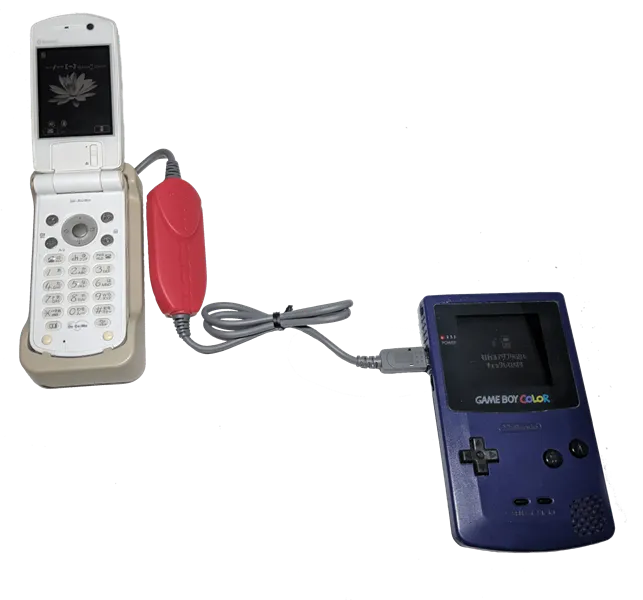
Anyway, the Crystal version was more notable in Japan due to its ability to allow long-distance trading and battling via cell phone networks with what was called Mobile System GB. For December 2000, this was obviously new ground. Because cell phones were much rarer in the west at the time, this feature and the Mobile Game Boy Adapter peripheral needed to use it were not brought over for localized versions of Crystal. Though Mobile System GB was mainly for players to interact with each other, it had other functionalities as well, such as a news bulletin board, minigames, and other minor events.
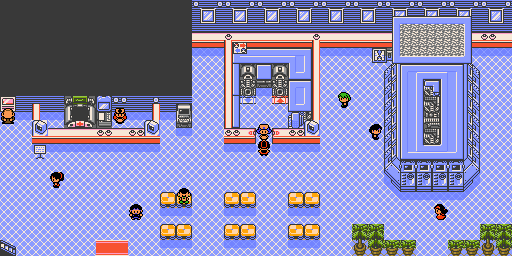
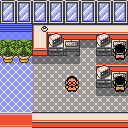
(Thanks to Bulbapedia for the map screenshots and other information.) I won’t do a deep dive on Mobile System GB right now, but suffice it to say that it was the means by which the GS Ball was given to Japanese players. No Mobile System GB, no GS Ball. No GS Ball, no Celebi. Except Game Freak obviously could have just implemented Celebi through any other means they wished. In fact, they nearly did. A scrapped Celebi event was datamined from the English versions of Gold and Silver, seeming to imply that Celebi was intended to be distributed at some point, but it was never implemented.
As far as I’m concerned, there’s no adequate excuse for not executing the plan. The most pragmatic excuse I can think of would be that after the third Pokémon movie underperformed in western box offices that plans to put the fourth movie (featuring Celebi) in theaters were abandoned. The third movie was released in the US on April 6, 2001 with Crystal releasing on July 29, 2001.
This would have left a fairly small window of time for the corporations that be to reconsider their plans. Technically, it could have been even less time, as the event might have required changes to Crystal‘s code before the final stages of production. Theaters would have been a very easy way to mass distribute Celebi via kiosks and the like.
Without that, what other methods do you have to physically gather enough people from across the country to essentially patch their cartridges? Pokémon events would eventually become normalized in the US, but we weren’t at that point yet. There were in-person Pokémon events prior to July 2001, but they were almost all riding the wave of Pokémon’s peak hype. It took that level of a phenomenon to motivate those events, and all signs at the time of Crystal‘s release pointed to waning popularity.
It’s hard to imagine that there was nothing Game Freak could have done to have a contingency plan. The fourth Pokémon movie’s western distribution could have fallen through for any number of reasons not limited to public interest. Remember that the western event was coded nearly to completion, so it’s not likely a matter of resources or effort. The main work was done.
If you ask me, the logical thing to have done would have been to plan for the movie’s release and kiosk distribution, but code a backup way to activate the flag for the Celebi event. What could have been done was program a button combination on the main menu or some such that would bring up a password screen. Game Freak could then distribute this password through any means that would unlock the Celebi event.
And get this: I’m still not requiring more programming! This functionality already exists in Crystal and is used to reset the in-game clock. The solutions were all there, and Game Freak either wasn’t clever enough or motivated enough to implement them. As I said earlier, I don’t consider either to be an excuse. Defenders may insist that Game Freak could have been worried about such a code being cracked prior to distribution, but consider this: why the hell should they care?
People already hack Pokémon like Mew and Celebi into their games using cheat devices instead of the intended methods. A concern over illicit means to acquire a code driving people to seek out illicit means to do the same thing and more would make zero sense. Not that Game Freak is above not making sense, mind. Anyway, this is all conjecture. And it’s all to ultimately say this: Celebi rocks, and screw Game Freak for keeping it from us English plebeians.
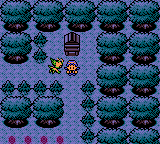
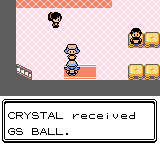
Phew. Anyway, the event is thus. Upon beating the Elite Four, you (for whatever reason) have to go to the Pokémon Center in Goldenrod City. If I recall correctly, you either need to take some steps inside or heal your Pokémon. Regardless, on attempting to exit an NPC will give you the GS Ball. You’re then expected to think of showing it to Kurt in Azalea Town, who remarks that it will take a day for him to look at it.
Upon returning, Kurt opens the Ball and Celebi flies out (this scene is very funny/confusing as Celebi isn’t graphically represented.) Kurt remarks that Ilex Forest seems like it’s freaking out, and you’re prevented from leaving Azalea Town until you investigate. Upon examining the infamous Forest Shrine, you encounter Celebi at level 30 and have the opportunity to capture it. Or kill it. I guess someone out there probably does that to every legendary.

Yeah, that’s it. No big plot or hubbub, but it’s a step up from Mew, I suppose. It’s nice to be able to experience this mythical event all these years later, though I wish it was either made available earlier or Celebi had a higher level. What sense does it make for it to be lower level than every legendary you encounter before it? I assume in the Japanese version you didn’t need to be any further than Ilex Forest to do the event, and if that’s the case, it’s still spitting in the face of westerners.
Though, to be fair, Japan gets some of that spit this time. The Virtual Console version still requires them to beat the Elite Four—but instead of Goldenrod City, they simply receive the GS Ball in the hallowed ruins of the Pokémon Communication Center once used for the Mobile System GB. If only Celebi truly could turn back time…
What changed: The visuals
Well, I went over Celebi. I suppose I’ll rope back around to the graphical adjustments again, as they’re relatively major (damning with faint praise, eh.) I expected that my return to Crystal‘s animations would leave me underwhelmed in the wake of future entries having similar flair. But I was completely wrong.
The enter animations in Crystal are genuinely impressive and eclipse in quality many comparable animations of later games. I think the timing was right for the amount of effort on display here. The Game Boy Color’s (GBC) resolution meant changing sprites didn’t take as long, there were only 251 Pokémon instead of 600 billion, and Crystal being relatively similar to Gold and Silver potentially freed up human resources to focus on the graphics.
I anticipated Pokémon to just sort of wiggle around or move a single limb, as they would do in some sequels. In fairness, I don’t think such a thing was possible on the hardware. Rudimentary animations like I described are often done via stretching sprites or different methods of storing separate parts of a sprite, and I believe neither would be doable on the GBC. Any animation would require sprite edits for every frame.
Another thing I expected was for them to be a consistent length, but they vary wildly. This seems to be because animations are primarily designed to sync up with a Pokémon’s cry. So generally speaking, the longer a Pokémon’s cry, the longer the animation. The longer the animation, the greater the need to make the animation dynamic. Common, unevolved Pokémon tend to have simpler cries, so those are often not too impressive (ironic, given how a Geodude blew me away as a kid.)
Animating with regards to the cry was a brilliant decision even if it’s obvious in hindsight. Cries were presumably done to differentiate Pokémon in a more organic way and make them feel like real living creatures, and it reinforced the different nature of these monsters compared to common RPG series of the time like Dragon Quest and Final Fantasy. These weren’t just monsters but animals with lives of their own.


I’m not going to go over every single one of course, but I picked up a few favorites. I actually quite liked Meganium’s, which moves its head about at different angles while it roars, bringing to mind the brontosaurus inspiration for its appearance. Machamp’s is another great one. Gold and Crystal share what is already my favorite Machamp sprite in the franchise, and he’s shown doing lightning-quick shadowboxing with his numerous arms complete with motion blur details. There’s many other great ones, and I still haven’t even seen all of them.
…Not for lack of trying. The game’s UI is programmed in a way that really gets on my nerves. As in all Pokémon games, the player has the option to turn off battle animations. While I’ve gotten older, I’ve used this option more and more liberally. It’s now my standard to turn them on only for major battles like Gym Leaders, Rivals, etc. Many attack animations in Pokémon are actually quite nice, but I find there’s a pretty annoying lag between executing actions, the dialogue displaying, HP draining, Pokémon fainting, and so on. Cutting out animations reduces the wait by practically half. I would rather everything just be snappier, but Pokémon and “respecting your time” are things that rarely, if ever, go hand in hand.
You may have guessed where I’m going with this. Intro animations are tied to battle animations. For some reason, it did not occur to Game Freak that players might be interested in seeing the brand new animations but not the animations they’ve seen 6000 times before. In order to experience much of Crystal‘s new content, you’re forced to wade through significantly more old content. Consider that intro animations are tied to length of Pokémon cries. Since Pokémon cries still play with battle animations turned off, that same amount of time could be spent making the sequence more visually interesting.
It’s like Game Freak didn’t realize people turned off animations with the motivation to save time, not because they had an intrinsic hatred of frames creating the illusion of movement. The intro animations don’t affect battle length. Attack animations do. They should not be treated as equals and lumped into the same option. Though even if they were both time sinks, it’s never not a good idea to give players more ways to customize their experience. This is a long game, after all, and it’s not asking for much.
So yeah, I didn’t get to see as many intro animations as I would have liked to. I would’ve kept those on the entire game, since there’s literally no reason to not have them, but I can’t help that I didn’t make Crystal. There’s some necessary additional awkwardness too related to the entire concept. If I like my team’s animations, it’s kind of pointless—I’m not the one seeing them. These animations only exist for the Pokémon’s front sprite, not their back seen from the player’s perspective.
Of course, you still see them sometimes. Evolutions and viewing the status screen, mainly. Evolutions you only see once, and I can count on one hand the amount of times I ever opened my Pokémon’s status screen. Unless you’re hunting for IVs or checking moves, why would you need to? It’s a bit of a shame. I can’t in good conscience ask them to animate every back sprite. It wouldn’t be the same, anyway. Literally, it would be a different animation, so you’d still miss the ones that motivated that solution.
I’m not sure what the fix would be. Animate them inside PC Boxes? Maybe, but it’s possible they wouldn’t be able to do that without increasing load times, and Box navigation already feels clunky. I think this is just an inherent limitation to the battle perspective 2D Pokémon games used. Perhaps there could have been a dynamic perspective shift at the start of each battle. You start from the perspective of your opponent seeing your prized Pokémon come out, then things rotate around to the angle we’re accustomed to and the fight goes on as usual.
By using a simple blurring effect or some other stock transitional animation, there would be no need to draw every frame of the rotation effect. I feel like this kind of cinematic language is common enough in media that even children would grasp what was happening. Hell, The Matrix utilized similar movements constantly, and that was over a year before Crystal‘s Japanese release. The Matrix was an international blockbuster even in Japan, so everyone was at least conscious of it. They had to be, given the incessant parodying.
As for the sprites broadly, Crystal departed from Yellow‘s standard. Rather than creating all new sprites, Crystal would have Game Freak select which of a Pokémon’s sprite they thought was best and feature it in Crystal, with a handful receiving a completely new sprite typically to be more faithful to official artwork.
I think this is a great approach, and I generally agree with their sprite choices. Why fix what isn’t broken, right? Developers only have so much time to work on a game, and doing this might have given them the precious time they needed to animate every sprite. It might serve as an example as to how cutting corners in one area frees up time for improving others.
Of course, I don’t always agree with their choices of which sprite to use. That’s entirely subjective. For instance, I prefer Feraligatr’s sprite in Silver because I think it’s a more dynamic pose, but Crystal features Gold‘s. It’s no big deal. I can’t even imagine how much more time and cartridge space would be needed to even consider allowing the player to choose their displayed sprite for every species, so I won’t insist that should’ve been done. As for other specific Pokémon, I mentioned Sneasel’s colors being fixed, which is nice. Three notable alterations are for three of the most significant Pokémon in the generation: Entei, Raikou, and Suicune.
I suspect the reason for this is that these three Pokémon had particularly elaborate designs that featured multiple colors or subtle variations in tone. Gold and Silver were originally being designed for the old basic non-color Game Boy model, and while they featured color support by the time the games were finished, they were still dual-compatible across models. Game Boy Color games capable of this do so in a number of ways.
For instance, sometimes alternative less-detailed sprites are stored on the cart, and these replace certain higher-detail sprites if the cartridge detects it’s on the older Game Boy hardware. This allows for developers to use sprites with subtler shading without resulting in a sprite that looks muddy or too dark when rendered monochromatically. More commonly, the same sprites are used but non-Color Game Boy hardware equates certain tones of colors to an appropriate monochrome shade.


Crystal was designed exclusively for the Game Boy Color and therefore does away with these concessions. Not only this, but the Color’s slightly better processor might have enabled the new Pokémon intro animations. In the case of the three legendary beasts, they’re now able to express details lost in their original sprites. Entei goes from being a bunch of shades of orange to having his brown fur coat back and his mane trimmed. Suicune’s headpiece no longer blends into the same color as its mane. Raikou receives a massive overhaul, not only being able to display his complementary purple and blue colors, but also having its face be on-model.
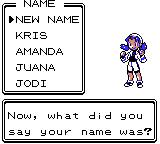
Crystal also allows the player to choose a female avatar for the first time. Honestly, it’s wild it took this long considering Pokémon always had a sizable female fanbase. I think the design of the new character, commonly dubbed Kris, is fantastic and I enjoyed playing as her. In contrast to the male avatar’s red sprite, Kris is primarily blue. I think Kris is one of the best female player character designs in the franchise. It would be a shame if they were to say, remake Gold and Silver and create an entirely different female design for no reason that’s far worse.
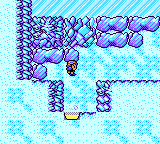
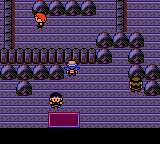
Changes to the environments mostly entail making them appear more natural. The Burned Tower now appears destroyed from the outside, as it should, and the inside features a dark blue palette that accentuates its dead, decaying nature. I’m a particular fan of the changes to the Ice Path, now sporting a bright blue palette and sprites of ice that make it more clear you’re not just in another cave. You’re never playing Crystal more than when you’re in Ice Path.
Other graphical changes are too numerous and mild to list here. You can look here if you want more specific details. Some of the adjustments are particular to the point of being baffling. A solitary drinking fountain was added to the National Park? Uh, cool, I guess. I doubt I ever would have noticed. I guess that makes it feel like more of a park, even if I’m never looking at that section of the map.
What changed: The areas
Generally, areas that received graphical overhauls had their layouts adjusted as well. The Burned Tower and Ice Path are among these, but I’m not going to scrutinize every modified tile. They were fine in my recollection of Gold, and they’re probably fine now too. Some Pokémon locations have been adjusted, and I believe I mentioned most of the relevant ones.
An odd choice was the decision to reduce the number of “swarm” Pokémon, wherein certain NPC Trainers could randomly call you on your phone and alert you to a swarm of a rare Pokémon exclusive to the Trainer calling. While a swarm is active, the encounter rate for one of these Pokémon is raised. Without a swarm, their encounter rate is a mere 1%.
This was a bad idea. Not only did you need outside help to determine which Trainers even had swarms associated with them, but you had to reserve a spot in your limited amount of saved phone numbers. Players already have to rely on RNG to encounter any Pokémon. Adding RNG on top of that RNG in the form a phone call is just senseless.
Keep in mind that a call from one of these Trainers doesn’t necessarily mean they’ll talk about a swarm. You could potentially wait days for a decent chance to catch some real winners like Snubbull, Yanma, Qwilfish, Remoraid, Dunsparce, Marill, and Tauros. Okay, Tauros is pretty good. Regardless, if you were a fan of any of these Pokémon, best of luck ever finding one.
Consider our discussion earlier about how Pokémon in generation 2 are already way too spread out. Now consider that 9 brand new Pokémon (counting their evolutions) have a decent probability of never revealing their existence to a player. 100 new Pokémon were added to generation 2. That’s nearly 10% of all new Pokémon, which I find insane. There are ways to make this number even more significant, such as when you consider most players won’t have access to 6 Pokémon from outside their starter choice. Or just make the figure literally 10% by not counting Unown, because it’s not a real Pokémon.
I’m not surprised that Game Freak realized this idea was bad (okay, maybe I’m a little surprised.) I am shocked that they thought anything from it was worth salvaging. Swarms aren’t gone but merely reduced. Yanma, Dunsparce, and Qwilfish still have swarms, while the others have been redistributed throughout other routes. The exception to this is Remoraid, who, for whatever reason, Game Freak chose to banish to the same shadow realm as Mareep. Octillery had a hard enough time as it was. Now he doesn’t even exist.
At the very least, no one likes Yanma or Dunsparce pre-Yanmega and pre-Serene Grace. But Qwilfish? He’s cool. Leave him alone! Remember how I talked before about Starmie completely overshadowing Lanturn? Qwilfish has the same problem with regards to Tentacruel, and now Qwilfish has the added problem of being obscenely rare in comparison to one of the easiest-to-obtain Pokémon in the franchise. Oh, the humanity! This entire mechanic should have been done away with, but an improvement is an improvement, I suppose.
What’s not an improvement is a change regarding the Sudowoodo and SquirtBottle sequence. Previously, you would speak to the florist in the building adjacent to Goldenrod City’s gym after defeating Whitney to receive the SquirtBottle. This Key Item could be used to awaken and battle Sudowoodo, who acts as a progress-halting roadblock. This sequence wasn’t done super well. It was extremely common for players to not find the SquirtBottle and end up walking around in circles without making progress.
In response to this, Game Freak made two major changes. First, they added additional (literal) flourish to the outside of the necessary building to draw attention to it. This makes it a little more obvious the building is important, increasing the likelihood the player will encounter the NPC. This is good. But they weren’t satisfied. In a step backwards, you can’t immediately receive the SquirtBottle after defeating Whitney. The player must first go all the way to Sudowoodo, witness an NPC saying she’s going to run back to the florist, then return to the building in Goldenrod to receive the SquirtBottle, then return to Sudowoodo.
This kind of asinine sequencing is part-and-parcel to Pokémon games, and this strikes me as one of the earliest examples of the needless padding that would be a growing critique of the franchise. Someone please, I beg of you, provide for me any possible reason there could be for not having the newly placed NPC simply give the player the goddamn SquirtBottle. Either Game Freak didn’t realize this obvious fix or chose to waste the player’s time, and both are embarrassing explanations.
Is it a huge setback? No. But I feel insulted, and I demand an apology from Mr. Game Freak. Additionally, many players struggle with Whitney and are likely to train their Pokémon by continuing to Sudowoodo’s location before having to turn around, adding at least one more retread of this path. Later games would feature redundant scripting like this in spades, so it feels worth pointing out a possible genesis.


Returning to the Unown, their presence was expanded very slightly. I’ve never understood Unown. To me, it always came across like Game Freak had some grand masterplan in the lore with Unown but ended up scrapping it for who knows what reason. The sense of mystique was kept, but a compelling resolution was never provided. What was the point? The weird-ass third movie? The Game Boy Printer functionality that no one in human history has used?
Those crazy bastards at Game Freak made 26 sprites for these losers. Technically 27, as the W Unown received a new design in Crystal, probably to look less like one of those wheel-shaped macaroni. An auxiliary purpose for the Unown is important because they have no other purpose. They are completely unusable for any kind of player, with abysmal stats and a single attack move. Who decided they had to be that way? Who? What? Why? Someone has to answer for this atrocious alphabet soup.
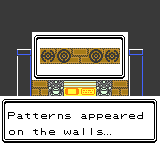
…Anyway, the Ruins of Alph essentially expand each room containing a tile puzzle by two more rooms. Behind each puzzle is a message spelled out on the wall in Unown letters. If you have at least enough brain cells as there are types of Unown, you’ll be able to interpret the word they’re spelling and associate it with an action. For instance, one spells “HO-OH” so you bring the legendary bird Pokémon along. This opens up a door to a room containing four items and a hole. The hole drops down to a message spelled out on the floor unique to the location explaining some of the ruins’ background.
The items are mostly a hodgepodge of berries, restoratives, and redundant Hold items. To their credit, the restoratives are all natural items such as herbs and powders, the same bitter medicines that you could buy in the Goldenrod City underground. It wouldn’t make sense for an ancient civilization to have modern Potion items and the like, and I respect that attention to detail. I would have liked to see some of Kurt’s special Balls among the items, as an NPC in the game remarks that ancient Trainers hallowed out Apricorns for Balls prior to the invention of modern Poké Balls.
Honestly, I still don’t understand what the Ruins of Alph and the Unown’s history is. I only went as far as Bulbapedia, but not even they offered up an interpretation of the new, cryptic messages. From what I gather, a clan engraved words in the ruins for posterity and after creating a Pokémon statue “outside” they left the ruins for the sake of “them,” whom they express a need to walk in harmony with. That’s a pretty direct transcription of all four messages.
First of all, who is this clan and why are they of any significance? What did they accomplish? For all we know, they wandered into these pre-existing structures and encountered Unown. Anyone could have done that randomly. It didn’t even need to be a group of people. Why should we care what they have to say? It seems implied that they are just as clueless about the Ruins of Alph as we are.
Second, why did they engrave their message in the shapes of Unown? They seem to want to share a message with the world, yet both hid their message’s location and obfuscated its reading. Since the Unown’s shapes almost entirely overlap with English and the words engraved are modern English, it can be assumed this clan knew how to write in English. So why not engrave with normal letters? Did they think we wouldn’t realize the Unown were shaped like the alphabet? That’s not a vote of confidence.
Third, what the hell is the statue they’re talking about? They said they erected it “outside.” Where? There’s no statue out there. There’s just a bunch of Smeargle and Natu. Did they mean the slide puzzles? Those aren’t statues by any means. If they meant those, why did they choose those specific Pokémon? If they didn’t mean those, why is there no statue? Why did the game’s developers feel the need to mention a statue if it’s completely irrelevant?
Fourth, why do they remark that humans must learn to walk in harmony with “them?” I’m going to assume “them” refers to the Unown, otherwise the message about “depart[ing] for their sakes” makes no sense, as other Pokémon exist outside the Ruins of Alph. Saying humans must walk with the Unown and then literally walking away from the Unown seems a bit hypocritical. Why was it necessary for them to leave the ruins? How long were they there? What changed? Did the Unown just not like freeloaders? They seem pretty low maintenance to me.
Fifth—great insight? The fuck insight do Unown have? All they do is fly around and get killed by other Pokémon. How did the clan determine they had such insight? What was that insight? Why would they share that the Unown had insight but not the insight itself? The former implies they want us to receive that insight. What is the “power to sense with mind?” Doesn’t every Psychic-Type Pokémon have that power? What is the significance of them “rejecting outside?” I reject outside every day, but no one praises me for it.
Am I overanalyzing this? You could reasonably say so. But keep in mind that everything regarding the Ruins of Alph was created by an artist at Game Freak. Artists have motivation for what they do. I’m trying to reverse engineer that motivation. And I can’t. My only conclusion is that there was meant to be additional material that completed this mystery that we never received.
Otherwise, I have to assume that a person or persons at Game Freak essentially just splattered random paints onto a blank canvas. That seems harder to accept to me. They could’ve just created stupid alphabet Pokémon that hung around in ruins for no reason, but we see in Crystal how they weren’t satisfied with that. There had to be a reason. But they just rose more questions. God help me. This new content is a wash. The items, the lore, the puzzles—all of it. The game’s not worse for its addition, but I’d hardly call it better, either.
Addendum: A few days after penning the section on the Ruins, a curious YouTube video appeared in my algorithm titled How I Solved Pokemon’s Biggest Mystery. Created by user BlueBoyPhin, this mini-documentary chronicles his trip to Japan where he would visit real-life inspirations for generation 2’s Johto region. It’s no secret that every Pokémon region is based on a real part of the world, but Johto appears to be imbued with particularly direct analogues. Game Freak originally believed Gold and Silver would be the final Pokémon games, so perhaps they were feeling a bit wistful. But I digress.
BlueBoyPhin visits Asuka Village, whose own ruins appear to serve as the basis for the Ruins of Alph. I’m not the biggest fan of the video. Excessive, lofty prose about video games can be a pet peeve of mine (no, it’s not ironic — I’m verbose, but I rarely invoke lofty phrasing.) I also think the script is not self-aware of how it’s describing a quantity of suppositions as if their frequency is evidence in and of itself. There’s a lot of ambiguity when it comes to symbolism, and common symbols have been used so much throughout history that they’ve become associated at some point with virtually every concept imaginable. Drawing parallels between potentially disparate things can often only require a smidge of creativity.
Speaking of creativity, I’ve seen mentions online about how BlueBoyPhin is restating old trivia as if he discovered it. There’s no beating around the bush there, as the video’s title is pretty self-aggrandizing. I’m not compelled to rake someone over the coals just for indulging in clickbait, but I do think it’s very funny how commenters allege that BlueBoyPhin has been deleting any comments mentioning how this information existed before his video.
In a nutshell, BlueBoyPhin (and as alluded to, others before him) posits that the Ruins of Alph were designed to be “unsolvable”, an enduring mystery that reflects Asuka Village’s uncertain history and Japan’s rich historical culture. I don’t necessarily buy into that theory, but it is interesting, and I appreciate BlueBoyPhin providing the images and historical context in a convenient format. After the controversy I’m a bit hesitant to platform the video, but here it is.
The Dragon’s Den stands out as a relatively significant change. The area is much less barren than before, with a few added Trainers, an enterable shrine, and an expanded story sequence. I guess I’m fine with that. It did always strike me as odd how pointless the area was, considering how cool it looked and how it had a unique, awesome song. There isn’t too much more to do here, but it’s something. For all other changes I don’t have much of an opinion on, I would again refer you to Bulbapedia’s list.
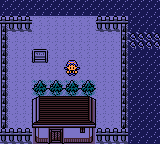
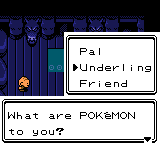
I would like to mention, however, a bit of bullying on Game Freak’s part. After the story events regarding the Dragon’s Den conclude, the player can return to the shrine and speak to Clair’s grandfather for a free Dratini. Ordinarily, this is unremarkable as Dratini are naturally everywhere in the Dragon’s Den. But the Dratini given to you can have a unique quality depending on how you answered the old man’s personality test prior to receiving the Rising Badge.
It’s a pretty basic “do you see Pokémon as friends or do you hate them” sort of deal. Nearly every player who answers compassionately will obtain a Dratini that knows ExtremeSpeed, an extremely valuable and otherwise unobtainable move. To put it another way, if a player just wanted to see the dialogue for picking the obviously wrong answer, they would unknowingly be forever robbed of an optimal Dragonite. It’s pretty mean.
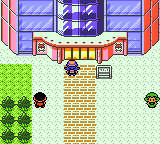
Oh, damn it. I nearly forgot to mention the goddamn Battle Tower, one of the most advertised new features of Crystal. The Battle Tower is essentially injected into Route 40, the zone directly west of Olivine City where the player is compelled to Surf southwards to Cianwood City.
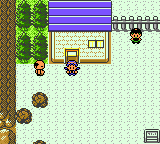
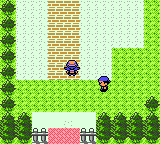
The geographical adjustments made to house the Battle Tower are among the biggest changes to the world from Gold and Silver. I have a certain fascination with these new areas for that reason, even if they don’t amount to much. If anything, it makes them more compelling. They feel like liminal or negative spaces, as if they shouldn’t be here because the environments of Gold and Silver on Game Boy Color are otherwise so timeless and set in stone. It’s weird. The (Japanese/International) Blue and Yellow versions would alter existing areas from Red and Green, but they didn’t add to the world.
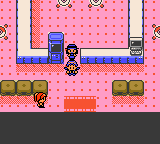
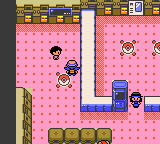
Uh… I didn’t play it. I have never been a fan of the Battle Tower. Raising competitive Pokémon has been a ruthless time-sink up until recent entries, and it has always been for far too little reward. You often have to do massive, agonizingly slow grinds to acquire points to trade for things that you’d want to make your Pokémon team more competitive. It’s a feedback loop, and I appreciate that replay value, but it’s a pretty lame one in my opinion. I love Pokémon battling, but the Battle Tower does not capture why.
It only makes matters worse that this is their first go at the format, and to their credit they made substantial improvements as early as the next generation’s entries. In Crystal, the Battle Tower can be accessed and participated in as soon as reaching Olivine City—no Champion status required. That is, if you’re playing the English version.
In a bizarre twist of fate, the Japanese players were screwed on this one. The Battle Tower was locked until the player connected to the Mobile System GB for the first time, despite the Battle Tower having offline content. Those conniving weasels at Game Freak had ’em by the Poké Balls. You would expect this restriction to be removed in the Japanese Virtual Console version, ala the Celebi event being enabled for the English one, but no! Japanese players are seemingly forever barred from accessing this completely superfluous content. Karma for us never getting one of the coolest Pokémon.
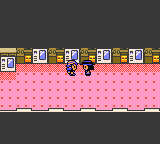
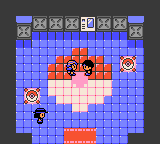
The Battle Tower consists of ten stages each pertaining to a ten-level range up to level 100. If you pick level 20 for instance, you must choose three Pokémon to participate that are equal or lower to level 20. The auto-leveling feature present in later games isn’t present here, so you have a slim window to participate in a certain level tier.
This makes using the Battle Tower even more of a nuisance. You essentially need 10 different teams to experience all tiers. No two Pokémon can be holding the same item, and you cannot use items during battles. You face 7 Trainers in a row with teams randomly generated using a pool of fixed Pokémon specific to the tier you’re challenging. Your team is healed between every battle, so winning consistently is the challenge rather than endurance. Your reward for overcoming one of these marathons? 5 of a random kind of Vitamin item (Protein, Carbos, etc.).
Yeah. It’s… not great. This begins the time-honored tradition of rewarding you with items that only help you win more in Battle Tower. To put this into perspective, this prize has a monetary value of 49,000 (halve that number if you’re considering selling them.) With the Amulet Coin, you can earn a comparable amount from defeating the Elite Four, which is only five battles instead of seven. You can then choose to buy the Vitamin of your choice from the Goldenrod Dept. Store. The only practical benefit from the Battle Tower would be as a money-grinding spot prior to the Elite Four, but why do that? The Johto campaign isn’t very long, and what’s demanding that you have that much money at such an early point?
If you enjoy the Battle Tower for its own sake, more power to you. I just never got into it, and I wish more of an effort was made to draw me in. I could maybe be persuaded if the game records me beating each tier, which I didn’t bother confirming either way. Even then, the level gaps… Yeah, I don’t know if I’m gonna do this one any time soon. The most interesting thing about the Battle Tower to me was simply the new area to walk around in. No kidding.
In fact, I enjoyed it so much that I booted up a fresh save of Crystal and applied a walk through walls code so that I could walk around and take screenshots for all of you! Aren’t you lucky? Of course, the screenshots above were already from this excursion, so there’s not much more to see with regards to the pink spire. The process of obtaining them was kind of interesting though.
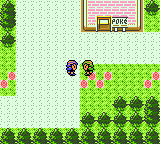
Well, the first thing I noticed had nothing to do with my task. This was my first time using a walk through walls cheat in a Game Boy Color era Pokémon game, and it seems like the game only stores a limited number of NPC sprites before going through a loading zone. Those not loaded appear to be automatically filled by Kris’s sprite which results in clones of a variety of colors.
At the very least, this confirmed for me that we were lucky to default to blue. I was actually surprised so much of the world map was loaded at once. The game would crash if I went across a boundary not connected to another normally accessible area, but after sticking to the main roads I successfully navigated myself to Battle Tower.
Amusingly, any Trainer encounter would open with a white screen before snapping back to the overworld where the game continued as if I had won. I took my initial screenshots, but felt I had to see what the full Battle Tower looked like. Tempting fate, I walked right past the clerk NPC and helped myself to the thunderdome. I expected a battle here to either crash my game or be skipped like before. Instead, I was greeted with this:
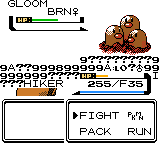
Sweet mother of Celebi, what has happened here? I have a Tauros very confused about the number 9 and insisting it’s actually a Hiker. Shoutout to the lone 8 that somehow got in there. My opponent was a “Gloom” that has seen better days. I’m not sure if this is a glow-up or worse.
Perhaps Crystal, having been released later, had different programming for its Battle Tower than what was making me skip battles on the overworld. Regardless, selecting “FIGHT” immediately ends the battle and acts as if I’d won, just as before. I didn’t dare attempt the other commands, but I suspect “PKMN” would have crashed my game while “PACK” would have just displayed an empty inventory. That’s what both of those functions did in the overworld menu when I tried them after going out of bounds (the game seems to forcibly provide you a full menu once you leave Elm Town.)
I had assumed the “Pokémon” in this battle were generated by numbers pulled from the Trainer class of the participants. Ergo, I thought I would see my Revolution Number 9 Hiker Tauros in every battle but a different opponent whenever I fought a new Trainer class. This was not the case. As far as I noticed, I saw the same thing for all seven Trainers. Naturally, I had to see what happened if I won. I expected nothing out of the ordinary, but had to see for this article if the game displayed fireworks for winning or something. All I got was this:
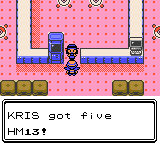
I don’t know what to say. I have no idea what could have happened in the programming that would replace the intended vitamin rewards with a non-existent HM. Well, maybe one idea. The vitamin you would normally receive would be randomized among the different kinds. That arbitrary (“random”) number has to come from somewhere, so maybe it references your party’s Pokémon in some way. Since I didn’t have any, my impossible number might have corresponded to an illegitimate item ID which resulted in a failsafe response instead of crashing the game.
I did a quick search, because if this was an intentional failsafe then it would be very likely that others have seen the exact same “item.” I felt vindicated when I found one article, implying it’s a known glitch item, but it didn’t supply a technical explanation. I found various other mentions after doing an exact search, but nothing too exciting. I suspect I’m on the right track, but am comfortable stopping my search for now and filing this under “mildly interesting.”
What changed: The writing
One of Yellow‘s most obvious adjustments to its predecessors were the mild alterations to narrative. It was a bit of an odd duck in hindsight. While the anime is an important cornerstone of Pokémon’s multimedia empire, it’s mostly kept separate from the games. Or rather, the anime acknowledges material from the games, but the games rarely acknowledge material from the anime. This resulted in Yellow‘s script changes largely being things that made it more similar to the anime’s storyline. You begin with Pikachu, battle the iconic Team Rocket trio of characters, you can gather all starter Pokémon, and so on.
Precedent implies Crystal would do the same, but as far as I’m aware, it sets the new trend third versions would follow. Crystal would instead expand the independent universe of the games’ continuity with the intent of creating a richer, more immersive world. I don’t want to overplay things too much, as Crystal is by and large the same narrative.
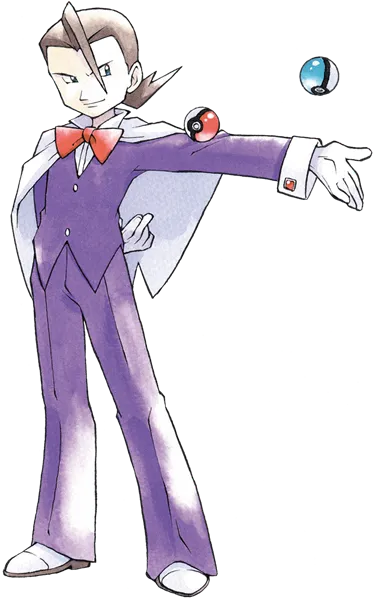
The greatest addition is the Suicune subplot. I already talked about how this focus makes little sense to me in my opening section, so I won’t repeat myself. While awakening the three beasts, Suicune takes an interest in you for some reason before hopping away. A new character and friend of Ecruteak Gym Leader Morty, Eusine is pursuing Suicine and is naturally curious about its fascination with you. Eusine is referred to in-game as a “Pokémaniac” but instead of their typical supervillain cloak dons the outfit of a Las Vegas magician. This has nothing to do with anything, and the only thing this magician ever makes disappear is your time.
As you follow Suicune throughout new, set locations (a departure from its previously “roaming” encounter), Eusine provides colorful commentary that’s impossible in the modern era to not read as him being horny for Suicune. He’s a bit jealous and aims to appeal to Suicune over you, but is otherwise a friendly character.
Tangent: My History with Eusine
Long after Crystal‘s release date, there was a line of Game Boy Advance games titled Game Boy Advance Video. These cartridges were not games, but instead contained heavily compressed episodes of TV shows and occasionally movies for GBA owners to watch on the go. Portable video was still a fairly novel concept at the time, but the technology was still rapidly improving when Nintendo decided to take a crack at it.
It appeared audiences weren’t as willing to accept Nintendo’s compromised approach as the company may have hoped. To my knowledge, Nintendo never stated the Video line was a success, and the existence of multiple cancelled titles appear to corroborate why—despite their relative economic convenience.
These cartridges were $20 MSRP—a notable $10 difference from standard GBA games. Many people who owned a GBA were children, and this product line meant they (or rather their parents) wouldn’t need to invest in a competitor such as VideoNow in addition the requisite video media. The install base was already there. The technology was… sort of there. So why not?
If I had to come up with a reason as to why the Video line was a commercial failure, I would provide an anecdote: I never knew anyone who continued to purchase Video titles. Consider how many of these need to be produced in order to keep stock in stores, similar to the games themselves. The audience is always moving onto other games, new or old, and as such that stock is constantly moving in and out of stores.
The reason to move onto new games is obvious: they offer different experiences. The fundamental experience of a Video title is always identical. They allow you to watch video on your GBA. It never changes. Once you’ve tasted the novelty of portable video, what’s left to incentivize you to buy another?
It would have to be the content. But the content is available via actual TV, and it’s a better experience due to the poor quality of GBA Video’s compression methods. Necessary, sure, but there’s a limit to how much people will compromise, and the portable TV market trend demonstrated where that line would be drawn.
Add in the fact that for a mere $10 more you could buy a video game that would almost certainly provide at least ten times more hours of entertainment, and the decision for what to buy is obvious. And the decision for what retailers should pay to stock is as well.
This is all to preclude the fact that I was at least one of many children who was suckered in exactly once. My GameStop had a few Video titles, and I noticed. Why the heck I chose Pokémon is just as much of a mystery to me as it is you. I’ve hated the Pokémon anime since I became old enough for independent thought, which was definitely prior to Video’s existence. In all likelihood, my GameStop only had Pokémon episodes stocked. Apparently no one else liked the anime either. I do remember I had choices there, though.
Volume 1: “A Hot Water Battle” / “For Ho-Oh The Bells Toll!” and Volume 4: Beach “Blank-Out Blastoise” / “Go West, Young Meowth”. I’m learning now that these were apparently the first and last Pokémon releases for the Video line. Considering that this was my first Video purchase and that my GameStop had the original volume still stocked perhaps implies some other issues with Video’s market presence.
I literally remember saving up money to get one of these. I was hellbent. It’s like I was sick. I don’t know whether I saved up money from a special occasion or lawnmowed my grandma’s backyard in exchange for some spending money. Probably the latter, but that’s not important. Well, none of this is, honestly. Who even chose the episodes to be in these volumes, and why?
So I had to really think. Did I want the one featuring the all-time great Blastoise, or did I want the one that sounded more significant to the overarching story? I settled for the latter, which is weird since I was otherwise completely over the Pokémon anime by that point. I can barely remember anything about either episode, and that probably says it all.
I remember Eusine coming across as much more of a snobby prick than he does in Crystal. And I remember the second episode having a lot of Totodile in it, so that episode was probably better. Part of me wonders if my main motivation to get a GBA Video title was how afraid of the dark I was as a kid. It was a portable nightlight and white noise. What’s more white noise than the Pokémon anime? Nothing.
While researching these offenses to art I discovered some interesting production info. The episode Go West, Young Meowth was credited by Meowth’s English dub voice actor, Maddie Blaustein, as being her inspiration to come out as a transgender woman. Blaustein would relate to Meowth’s troubles and in-episode qualm about being “a human trapped in a Pokémon’s body.” It’s a cute story, and a reminder of how hugely impactful art can come from the most modest of sources.
Other than her stint as Meowth (a role which she inherited from Nathan Price starting with episode 33), Blaustein would provide numerous other performances of (mostly) minor characters and Pokémon. Notably, she would be the voice of Bill, Lt. Surge, and Bruno. What might amuse more people is the sheer volume of memorable Pokémon performances she delivered. Corphish, Magikarp, the Alakazam line, and many more.
Including, most importantly of all…
Blaustein’s role as a Pokémon allowed her to be the only reprised role for the infamous Pokémon Live! musical. Blaustein would demonstrate her singing talents there as well as in many of the anime’s songs featured in the dub’s Pikachu’s Jukebox segments.
Blaustein’s dedication to her art was reflected both in her commitment to replicating Inuko Inuyama’s performance as Meowth, and her communication with fans on the forums of websites Bulbagarden and Serebii.net. Blaustein would pass away suddenly at the relatively early age of 48 from a stomach virus. Rest in peace, young Meowth.
Where the hell was I? Eusine? Outside of his ranting and raving, Eusine contributes one other thing to Crystal which is a single battle with him in Cianwood City. This optional battle consists of a Drowzee, Haunter, and Electrode. All are appropriately leveled for when the encounter can be accessed and possess no other noteworthy qualities.
At the end of Suicune’s quest, Eusine eventually returns to his hometown of Celadon City and permanently squats in the Pokémon Center at Celadon City. Eusine otherwise does nothing of importance and can never be battled again. Thus, conclusion of Eusine can be summarized as: why? At the very least, he could have served as another powerful post-game Trainer, and his house could have been any number of Celadon City’s redundant buildings. Kanto desperately needed to fill out its world and this would have been an easy way to do it.
In what I will charitably characterize as a small mercy from Game Freak, Suicune is changed from a roaming encounter to a static one. The player must witness it in a sequence of fixed locations before it finally settles in the Tin Tower where the player can battle it at their leisure. Since a crafty player will save their Master Ball for one of the two remaining roaming beasts, this means that they will only have to engage with the godawful roaming mechanic for one Pokémon. Hooray!
Yeah, it’s really nothing that interesting. The plot isn’t expanded in any way, as the Suicune subplot ultimately isn’t related to any major events. When you catch Suicune, that’s the end. The real contribution to the original games is the addition of a unique battle theme for the three legendary beasts.
It’s really good too! GS set a high standard for music, and Crystal meets it. This would be the series’ first foray into unique music for legendary encounters, which is now entirely standardized (first for the mainline games, for all of you smart alecks out there.) When returning to the pre-Crystal games, I’m always taken aback for a moment when I encounter some mythical, godlike creature and its treated with the same auditory gravitas as encountering a literal rat. The added anticipation of hearing the battle theme change before the screen transition finishes and reveals a legendary Pokémon is a great benefit too.
They nail the tone of this track as well. I love the ambiguously threatening dramatic build-up quickly giving way to twinkling, higher-pitched notes. The track balances its acknowledgment of the beasts’ power with a sense of awe at their mystique and your fortunate encounter.
I have to give credit for the compositional sense here. The three beasts are never characterized as dangerous to anybody, so it would have felt out of place to give them an intense, imposing backing track. Compare this song to the following generation’s legendary theme, which is intimidating and overwhelming in scale. Groudon, Kyogre, and Rayquaza had world-altering powers and the former two were demonstrated to be world-ending threats in the storyline.
These touches demonstrate why the Pokémon series’ music has always played such an integral role in bringing the fictional worlds to life. I also want to point out that Crystal‘s legendary theme appears to incorporate a motif from the same generation’s champion battle music at around 42 seconds. Here’s the champion battle theme for comparison. It could just be the limited range of sounds the Game Boy Color can produce combined with a common compositional trope, but it would be appropriate to draw the comparison between two of the player’s most dramatic moments.
Now, if I can temper my praise a bit: why did Ho-Oh and Lugia not receive the same treatment? They have even more of a legacy attached to them, with one being the literal creator of the beasts, but they’re still stuck with the normal battle music. They don’t necessarily need their own songs. They would fit with the new track just fine. I just don’t understand the decision.
This comes off as even more bizarre when considering that encountering Ho-Oh now serves as the narrative capper to the three beasts. In GS, the player would be awarded a Rainbow or Silver Wing just a little before receiving their eighth Johto badge. The Wing received would depend on the player’s version. Effectively, players would be able to capture their box legendary at an earlier point than the other version. The unfeatured legendary would have to wait until the player reached Pewter City in Kanto.
The major change here is that the player now cannot enter the Tin Tower’s higher floors where Ho-Oh dwells without having captured—and currently owning—the three beasts. Simply on its face, this alone makes getting Ho-Oh significantly more time consuming. Maybe they wanted to make the player work harder to obtain a Pokémon that would steamroll the Elite Four?
It would kind of make sense, as Lugia isn’t obtainable until Pewter City in Kanto, the same as if you were playing Gold. But because Ho-Oh can still technically be caught before the Elite Four, it being the only one available beforehand undermines the concept that these two Pokémon are meant to be equals. Game Freak just decided Gold‘s way of sequencing things was correct, even though you would expect a compromise from Crystal. It’s just strange.
Despite Lugia only being available much later in the game, both box Pokémon are now encountered at level 60. Also, neither one possesses their signature attack (Sacred Fire or Aeroblast.) That… really sucks, honestly. Trading the box legendary from their appropriate game is the only legal contemporary method to obtain these iconic moves. Well, there’s the Move Relearn feature in Pokémon Stadium 2 one can unlock, but that presents arguably even more obstacles.
With no new legendary Pokémon, this is a way Crystal is compromised from its preceding versions rather than improved. Keep in mind that, unlike later generations, Gold and Silver players could capture both of the box legendary Pokémon in one game. If that aspect couldn’t be a selling point of Crystal, then at least their unique moves could have been. Instead it feels like we were underhandedly served another reason to shell out cash for all three versions of the game. I mean, who the hell is going to trade you their Sacred Fire/Aeroblast Ho-Oh/Lugia? Come on.
One of the more distinct changes I noticed was essentially a rewrite of Gym Leader Clair’s character. I believe Clair isn’t particularly popular among players for the homework she assigns them after she gets whupped, but her instructions reach more antagonistic levels in Crystal. In Gold and Silver, Clair indeed is unable to accept her loss and bitterly demands you go to the Dragon’s Den to further prove your mettle. It’s deliberately unfair treatment in any installment, and that doesn’t change.
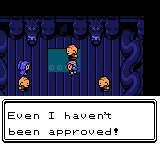
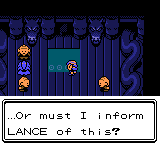
What changes in Crystal is her motive behind doing it. Since her character doesn’t get much focus in GS, it’s possible to interpret her mentality as excessive pride—a holdover of the noble presence commanded by another member of her family, Lance. Crystal has Clair appear again after the player passes her grandfather’s “test” (i.e. talking to him) where she throws a literal tantrum and pouts about not even her being able to pass the test.
Her grandfather (rightfully) admonishes her for not handing over the badge after losing, and she reluctantly corrects that mistake while also providing you the usual DragonBreath TM. This depiction of her isn’t necessarily any more immoral than her GS incarnation, but it does portray her as both very childish and unskilled.
From what I recall, GS doesn’t mention that she’s never passed the test at Dragon’s Den. And from my understanding, one needs to do so to wield Dragon-Type Pokémon — which Clair does. So the whole thing doesn’t seem to make sense all around. Basically, I just thought Clair had a cool countenance to her and I wish they didn’t take her in a further demeaning direction.
The Pokégear’s phone function has been expanded. It works as before, with NPCs occasionally offering that you register their phone number. Most of these potential contacts were and still are Trainers, who in GS would intermittently call you. Most calls were useless flavor text about their Pokémon nearly being killed by a Rattata or something, but sometimes they would request a rematch in another opportunity to earn experience for your Pokémon and money.
That’s all present, but now many more events are possible. Depending on the specific Trainer, you can be offered free items. Some offer information. There’s the aforementioned swarms, for instance. Crystal‘s Goldenrod Department Store has a new rooftop section where sales can occur, but I had no idea this existed for my entire playthrough because I had never registered Camper Todd who calls you when one is active. That feels arbitrarily very punishing since I had no idea he could do that, and the player has a limit on contacts. If it turns out he did tell me and I just ignored him, let’s just say that I don’t endorse insider trading.
Beyond these specific roles giving Trainers more individuality, there’s also the increased variety in flavor text. Trainers now have specific personalities applied to them that determine which dialogue you’re given. This is a noticeable improvement over GS, where sentences would always be the same other than swapping out contextual words like Pokémon or locations. Nevertheless, it didn’t take me long to feel like I had already seen the majority of possible text patterns.
In that sense, the fundamental flaw of the Pokégear’s phone remains from GS: it’s just kind of a nuisance. Pokémon games aren’t fast-paced to begin with, and having that made just a little bit worse by random interruptions of mostly inane babbling is pretty annoying. It’s an easily solvable issue too. Just have a “silent” function like any actual phone.
I don’t think they’d go for an individual block function, but that would be even better. Players would use it to rig which phone calls they received, but they can already do that by manually erasing contacts. Speaking of, the small number of maximum contacts is still a problem in Crystal, but its inconvenience is exacerbated by the greater amount of contacts you’d want to save.
Another addition is the Buena’s Password radio program. At certain hours of the day, the player can tune into the broadcast to receive a password. Upon speaking to Buena at Crystal‘s marginally expanded Radio Tower in Goldenrod City they can give her the password in exchange for 1 point. You actually choose from three options, so I assume reloading your save file before answering works.
You may want to do that, because there are some decent rewards. An impatient kid can be ripped off with the two cheapest items, those being an Ultra Ball or a Full Restore for 2 points. Waiting three days will net them a Nugget or Rare Candy (!), and the full five-day cost can be exchanged for a vitamin item of the player’s choice.
A Rare Candy every three days is fair enough, though you’d kind of have to be a fool to go for anything else, which feels like a waste. Offering Hold items would have been a safe bet. This suggestion feels ultimately strange though, since a point exchange shop would be commonplace in future generations’ Battle Towers—which this game has and could also use superior prizes for. Buena’s Password is a cute addition overall. It doesn’t require listening to the radio for an extended time to participate which is significant as you can’t read the radio’s dialogue while doing other tasks in generation 2. If I were playing this daily as a kid, I’m sure I would have relished in getting more Rare Candies.
While we’re in Goldenrod City, I may as well mention another new NPC. After defeating the Champion for the first time, a man appears outside of the Game Corner every Wednesday and Saturday. For 4000 coins, he can teach one of your Pokémon either Flamethrower, Thunderbolt, or Ice Beam. Interestingly, this effectively makes him the first Move Tutor in the series.
The Game Corner sells 500 coin bundles for 10,000 Pokémon Dollars each. That comes out to a cost of 80,000 per move. It takes roughly two runs through the Elite Four with an Amulet Coin to double your earnings to make this much. As if that wasn’t enough, you can only learn two moves a week due to this guy’s busy schedule.
Ouch. I mean, it’s nice not having to rely on the damn elemental Punch TMs or the low accuracy upgrades in Fire Blast, Thunder, and Blizzard. And I do like there being a reason to value your money now. But… two moves a week? Wednesday through Saturday is enough time for me to defeat Red, and at that point I don’t really need the moves. I also think it’s strange that the game does nothing to hint that this NPC even comes into existence after beating the Champion. These are very important moves after all.
But my Lanturn deserved Thunderbolt, and I may as well upgrade Sneasel’s Ice Punch while I was at it. So I did that aforementioned Elite Four grind, humiliating them so many times that they should have been out of a job. The schedule though? Hell no. I draw the line there. I was ready to do some Game Freak-mandated cheating. In GS you could reset the clock by holding Select, Down, and B simultaneously on the title screen and entering a player-specific code when prompted.
In what I can only assume is motivated by spite, Crystal requires you to follow this action by then releasing only Down and B, then hold Left and Up in addition to Select, then release only Select. Let me tell you, this was not a comfortable series of movements on a New 3DS XL. And I had to do it multiple times.
I don’t understand the change. Obviously, players would eventually learn of this and spread the button combination around, and from my knowledge the required password is still generated referencing the same data fields as in GS. It’s normal that Game Freak wouldn’t want players to cheat and break the spirit of the game, but I can’t say this method feels more secure—just annoying.
Wrapping It Up
As much as I would like to comment on every little change, I ought to wrap this up for now. My conclusion on Pokémon Crystal: it was really good. Great, even. What else could it have been? It couldn’t have likely been worse. We’re talking about one of the best generations in Pokémon almost entirely intact.
Regardless, it doesn’t feel unfair to request that Crystal have been better. As great as Gold and Silver were, they absolutely had their flaws. Chief among them is the lack of logic in the Pokémon distribution, as well as the nonsensically low levels of Trainers and Pokémon in the Kanto region and the region’s lack of content. The former had the bare minimum of adjustments, and in the case of Mareep’s removal made what could have been a wholesale improvement into a lateral move. If anything at all was done for the latter issue, it was so minor that the problem remains.
Despite my fawning over Crystal as a child, I can’t help but wonder if I would have felt swindled had I purchased it. The game is nearly identical other than some slight polishing in very specific areas, and the new additions almost entirely feel like mild amusements that would eventually blend into the same general experience.
The Pokégear having more varied calls? As if I’m not mashing A once I’m a few hours into the game. The Battle Tower? Sure, it’s more replay value. But I would rather spend that time completing my Pokédex. The new Pokémon enter animations? They’re wonderful, but I can’t bear to play the entire game with battle animations on, and they’re connected.
So I’m left with a question: “who is this for?” Somehow Yellow, despite objectively being more redundant than Crystal, felt like it made more sense to me. Game Freak were undoubtedly nickel-and-diming their unexpectedly massive fanbase, but there is another angle. The Pokémon anime was a major success in its own right, and it was going to be many people’s introduction to the franchise. Yellow provided them an entry point that would be familiar to them. No reason to start the game and ask “where’s Pikachu,” or “why doesn’t Team Rocket have Jessie and James,” or “why is Koffing upside down?”
Was it necessary for that entry point to exist? Eh, probably not. Kids adapt. Even more so back then when entertainment options were more limited. Whether or not you were bummed that Pikachu wasn’t immediately available, you were still gonna play the new game you got. And if the other content didn’t win you over until you no longer cared, you were a lost cause to begin with.
Point being, Yellow may have had the thinnest of justifications for what was most likely a simple and cost-effective way of making players double (or triple) dip—but it still had a justification. Crystal? I dunno. It feels like it was made because Yellow sold, and it felt like Game Freak themselves were fumbling in trying to think of what to add. But could they really not have known? The poor level balance of Kanto? The lack of content in Kanto such as the removal of the Safari Zone? People talked about these things, and the former should have been relatively easy to implement.
While I find Crystal‘s alterations and lack thereof disappointing, I don’t want to avoid giving the game credit in a vacuum. At the time of its release, this was the optimal way to experience one of the greatest RPGs out there. It wasn’t optimal by much, but I’ve no doubt that those players who started with Crystal had an incredible experience. They probably would’ve had a near identical incredible experience with Gold or Silver, but at the end of the day a good game is a good game.
I avoided the $30 price tag at launch and got a reason to replay one of the best titles on the Game Boy, so I can’t say I left the experience in a bad mood. If anything, my desire for more in and of itself implies the very opposite. Crystal would end up being the final mainline Pokémon game to feature the iconic “Gotta catch ’em all!” tagline. Whether the tagline is there or not, the sentiment lives on to this day. I suppose that some things don’t need to change.
The making of this article
With 18,212 words penned over 10 days, this is by far the longest review I’ve ever written. Up this point I believe this article more than any other most closely reflects my goals in writing. It’s equal parts personal retrospective and review, and in not wanting to sacrifice thoroughness for either I’ve written something appropriately dense.
The scope is reflected in more than just the word count, of course. This is the first of my reviews to have media elements, and I’ve introduced headers and dividers to distinguish content. I was shocked when I learned that I had 15,000+ words by the end of my first writing day. It goes to show how much effort I spent with formatting and media. There was a lot of troubleshooting.
This article is a watershed moment for me, and I hope to deliver even more close to — or greater than — its quality. I would also like to reiterate that I see this articles as living documents of my thoughts and experiences. At any point I may return to this article to elaborate on points, fix mistakes, reorganize, and so on and so forth. Nothing’s ever perfect, but I like getting as close as I can.
As such, this is a learning experience. If anyone has suggestions for improvements, please do not hesitate to share. The only thing I’m not too interested in is cutting my content down. These are meant to be comprehensive. If I’m being redundant in places that’s another thing, and I would appreciate anyone pointing that out.
One thing on my mind right now is how I might best credit my sources. I didn’t want to have small text under every element crediting a source and expanding the page length even further, but I certainly have no intention of hiding sources. It would be nice if people could click a button by an image and just see the source. I need to look into that. Again, if anyone has any ideas, please reach out to me.
Thank you for following this journey with me, and I hope you’ll be around for countless more.
Leave a Reply