








Honestly, I don’t believe I have that many highly-controversial video game opinions. They’re nuanced, if I can give myself credit for not being a total populist, but rarely is there an acclaimed game that I would even personally consider to be mediocre or worse.
It helps that I try to avoid games I think I would dislike and/or find uninteresting, so I don’t give myself opportunities to discover a distaste for Bioshock Infinite or something. Trying to think of an example where I’m fully on the alternative side, Front Mission is a title I’m particularly baffled by the praise for. If you like it, that’s great; I just don’t get it. I wish I did. Life would always be better with more things to appreciate, right?


But with regards to my opinions that have spawned the most arguments or other disdain, the winner might be my belief that Super Metroid is a very good game, but not an incredible one. And I am not shy about my contrarian takes. If I actually disliked Super Metroid, I’d rub it in everyone’s face. But I do like it. I’ve beaten it at least twice, even. Literally, it’s just not in my personal 9 or 10-out-of-10s. I prefer the RPG-style Castlevania games to Metroid in general, which is another take that’s gotten me some raised eyebrows.
If I’m ever the instigator of one of these conflicts—and I’m sure I have been at times—I’m usually disagreeing with someone putting forth the claim that Super Metroid is literally perfect. I do find that claim silly. To be fair, I don’t think works of art are perfect by their nature.
And I’m not being uncharitable towards the colloquial use of “perfect.” Obviously, it’s often used hyperbolically and might as well carry the connotation of “perfect for me.” I’m exclusively talking about philosophical discourse that’s actually considering what a literal perfect game might be.
All of my favorite games have major flaws in them I’d prefer weren’t present; I just don’t mind those relative to their strong qualities. I don’t want to come across as if I’m trying to position myself as the one “reasonable” person or anything, or that I’m never arrogant. Anyone is entitled to think my Super Metroid take is bad, regardless of how close or distant my opinion of the game’s general quality is to their own. I can make bad points sometimes, even if I try not to.


That all said, I think it’s possible to redefine the rules of what’s perfect in order to find something perfect; in fact, I think doing so is mandatory. As I’ve implied, perfection isn’t possible. It’s a hypothetical concept akin to infinite + 1. To me, believing in perfection is disbelieving in innovation. If something seems perfect, one might lack the imagination to envision something better. Maybe they won’t feel that way forever, but I do suspect that.
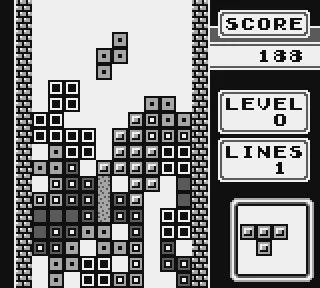
Anyway, there’s a great video on this topic by an excellent YouTube essayist, Matthewmatosis. He postulates that Tetris qualifies as a perfect game because there are no adjustments one can make to its concept that wouldn’t compromise its balance. His exact phrasing is more eloquent; technically, he even says “most perfect,” which I’d consider a misnomer. Anyway, the video is 6:29 minutes, and I’d recommend being familiar with it before continuing your reading. It’s worth your time, regardless.
A convincing case, isn’t it? It’s a video I’ve found especially interesting because of its meta. Matthewmatosis is one of the pioneers of high-minded video game analyses on YouTube. I don’t want to deify him as some unique super genius or anything. Point is, he’s a person with interesting observations who put himself out there earlier than many others did. It’s still very difficult to find YouTubers on his rhetorical level, but there’s far more competition now than there was during his heyday. I think his influence extends far beyond what his view counts might suggest. He’s good at what he does, is all.
Anyway, people noticed Matthewmatosis’s excellent videos and respected him for his knowledge, intuition, and reasoning. He tends to take a completely neutral, almost humorless tone during his narration. This is, I imagine, to stay focused on the topic, but it has the side benefit of making him appear dignified and intellectual. There’s pretense: video games deserve serious discussion. And he’d be right—they do.
But those traits also overlap with cultural signifiers of authority. Less self-reflective people can get caught up in rhetoric that sounds substantive but doesn’t hold up under logical scrutiny. There’s other popular video game critics I would personally put in that category, but I won’t name them as to avoid opening another can of worms.
Basically, you don’t have to actually know what you’re talking about to look like you know what you’re talking about. Your average person, necessarily so from their being average, is in the former camp. This means they can lack the framework necessary to recognize when someone’s making bad points. Every single person, myself included, is vulnerable to this regarding any topic they have an average or below-average understanding of.
This phenomenon goes in every direction. I would say Matthewmatosis is someone who knows what they’re talking about, but I feel like I came to my conclusion based on the substance of his arguments, not his erudite dialect. My confidence comes from personal experience with media analyses and writing professionally, as well as my capacity to acknowledge his arguments without agreeing with him. I’m usually in agreement with him, sure, but there definitely times when I disagree with his justifications or conclusions.
Anyway, Matthewmatosis earned many fans who’d claim he was a superior critic because he was “objective.” Remember that word? I feel like I don’t see it as much these days. It shouldn’t come as a surprise that I’m not much into the idea of “objective quality” in art considering my thoughts on perfection.
I think very minute things can be described objectively, but assigning objective statements value is next to impossible. “This game is objectively easier than that game” might carry the implication that it’s better that one game is harder or easier, but… is it?
I think it’s almost always infinitely more complex. Would Ocarina of Time look objectively better with 4k, high-resolution models? I dunno; I’ve seen plenty of inferior-looking, high-tech mockups suggesting the original game’s visuals were informed by far more than their polygon count. Hell, just swapping out the jagged, polygonal models can affect how lighting is designed to interact with them in each area. Considering things of that nature, where do the polygons even truly begin and end when discussing Ocarina of Time‘s visuals?


Matthewmatosis brought this “overeager” part of his fanbase up in one of his live streams I watched. While the statement that one’s opinions are ideal because they’re seen as objective is a flattering one to an extent, Matthewmatosis remarked, “I would be the last person to say my opinions are objective.” And that always really stuck with me.
I never had the impression Matthewmatosis was up his own ass or anything, but seeing someone who put so much effort into their thoughts and exuded so much confidence still simply assert their standards were still only that—their standards—was a little inspiring.
I like the implication that being a good critic isn’t about reaching a finish line called “being right.” Everyone could be better off pursuing higher-thinking without structuring it as a competition. It could help them focus on the dialectic. I don’t believe “it’s just my opinion” should ever terminate discussion, but if all parties lay their personal values on their table and still reach an impasse—isn’t that satisfactory progress in and of itself?
Everyone involved has now put more of themselves out into the world than there was before. It’s a net gain of human expression. Minds don’t necessarily need to be changed, but explored. If the latter leads to the former, that’s perfectly acceptable, too. We should be capable of changing upon the presentation of new information.
I’d like to be some fuckin’ Zen media guru like that myself, someday. Maybe not entirely. I mean, a bit of incredulity at others’ opinions shows our passion if nothing else, and it can be fun. There’s many ways critical discourse can be stimulating, including entertainingly and intellectually.
But it is possible to find philosophical discussion worthwhile while also understanding its relative meaninglessness in the grand scheme of things. No matter how seriously you take art, if you can’t take a step back sometimes and think “oh, fucking whatever,” you’re only going to hold your mind back in the long run. Plus, there is no magic combination of words that’s going to convince every single person of your argument. That would at minimum require that everyone forms their beliefs rationally, and we absolutely do not.
Oh yeah, that Tetris video. You may notice that Matthewmatosis redefines “perfection” to qualify Tetris, even though we ought to be familiar with the word. Consider this: what even is Tetris? The game where you spin blocks of four squares to form horizontal lines? Which one? Which of the roughly six-trillion Tetris games is the perfect one Matthewmatosis was talking about? And if it’s so perfect, why do we keep getting them, and why do they all receive different critical reception?
The simple yet complicated answer is that video games consist of more than their concept. Maybe someone would argue that the Tetris game in his video, Tetris for the Game Boy, is the perfect Tetris game… but why? There have been Tetris games with more features, color, improved visuals and sound, and even new mechanics like piece-holding and insta-dropping.
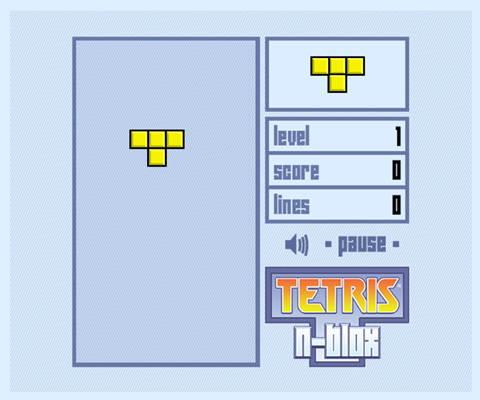
You could say that Matthewmatosis just meant Tetris with only its fundamental gameplay and absolutely nothing else—but that version of Tetris doesn’t exist. It can’t exist. At the bare minimum, Tetris is a game requiring graphical representation, and even the manner with which that much is done can vary greatly in quality.
If all the blocks were white squares with no sense of style or lines dividing each tile over a black screen, it would be a marginally harder playing field to interpret than any alternative. If we gave it basic coloring for functional purposes, then a hypothetical game that had nicer-looking colors would be objectively better even though they’re both fundamentally Tetris.
What if two games were identical in every way, but one had an alternate mode to play in? That one would be objectively better, right? The alternate mode doesn’t “count?” Why not, if it’s in video game software called Tetris? If it doesn’t count, you just had to redefine “perfection” to make Tetris fit it again. Perfection is a definition that can’t be compromised, because the absence of compromise is conceptually built into it.

There is no version of Tetris that can be made that eliminates the human, creative element—the subjectivity. Ergo, Tetris and all other video games are fundamentally incapable of being objectively perfect.
The end. There is no such thing as truth. Abandon your sense of self and dance naked around a fire until the end of the world.
…Or not. I can believe everything I just said and still think discussing game quality has meaning. That little thought exercise presumably gave you enough value to finish reading this, and if it did, then I’ve proven just one way it can be worthwhile despite the ultimate absurdity of trying to establish objectively true observations. It’s really no different from life itself; people have to invent meaning because life isn’t worth living without it. It’s more or less an axiom shared between every human being, even if many aren’t cognizant of its artifice.
Anyway, this began as a little preamble for a rewrite of an old Super Metroid review. It grew into something too unwieldy for an intro, so I decided to make it its own article to share some of my personal philosophy regarding art and critical analysis. It’s nice to have pieces I can point to on my site as a primer for how I approach media—or at least aspire to.
I want to make abundantly clear my position on a few other things. This is not a “gotcha” or takedown of Matthewmatosis’s Tetris video. That video is a thought experiment that establishes its boundaries and works within them. The question mark in the title and MM’s own use of “most perfect” within the script demonstrate that it’s presenting a hypothesis, not a theory. I have no proof, but my instinct is that he’d probably understand the points I’m trying to make here. I’m not attempting to contradict the video. I’m merely using it as a diving board into a different topic.
Likewise, I’ve no intention of criticizing Tetris. Even the thought of trying to dismantle Tetris‘s conceptual design comes across as laughable to me. I feel like I’d have to argue that Tetrominoes are culturally immoral somehow. I mean, the S and Z blocks are, but that’s no reason to draw the benevolent line block into it. Personally, I prefer the premise and feedback of some other action-puzzle games like Panel de Pon (Tetris Attack, Puzzle League) and Puzzle Bobble (Bust-a-Move), but I don’t think those are innately superior or inferior to Tetris or anything.
Well, thank you for your time. I hope you found this article worthwhile! Let me know if you’d like to see more general discussions like these alongside my standard reviews. If you want to offer extra encouragement, please consider subscribing to my site, donating, or subbing to my Patreon. It means the world to me. Until next time!
Leave a Reply