








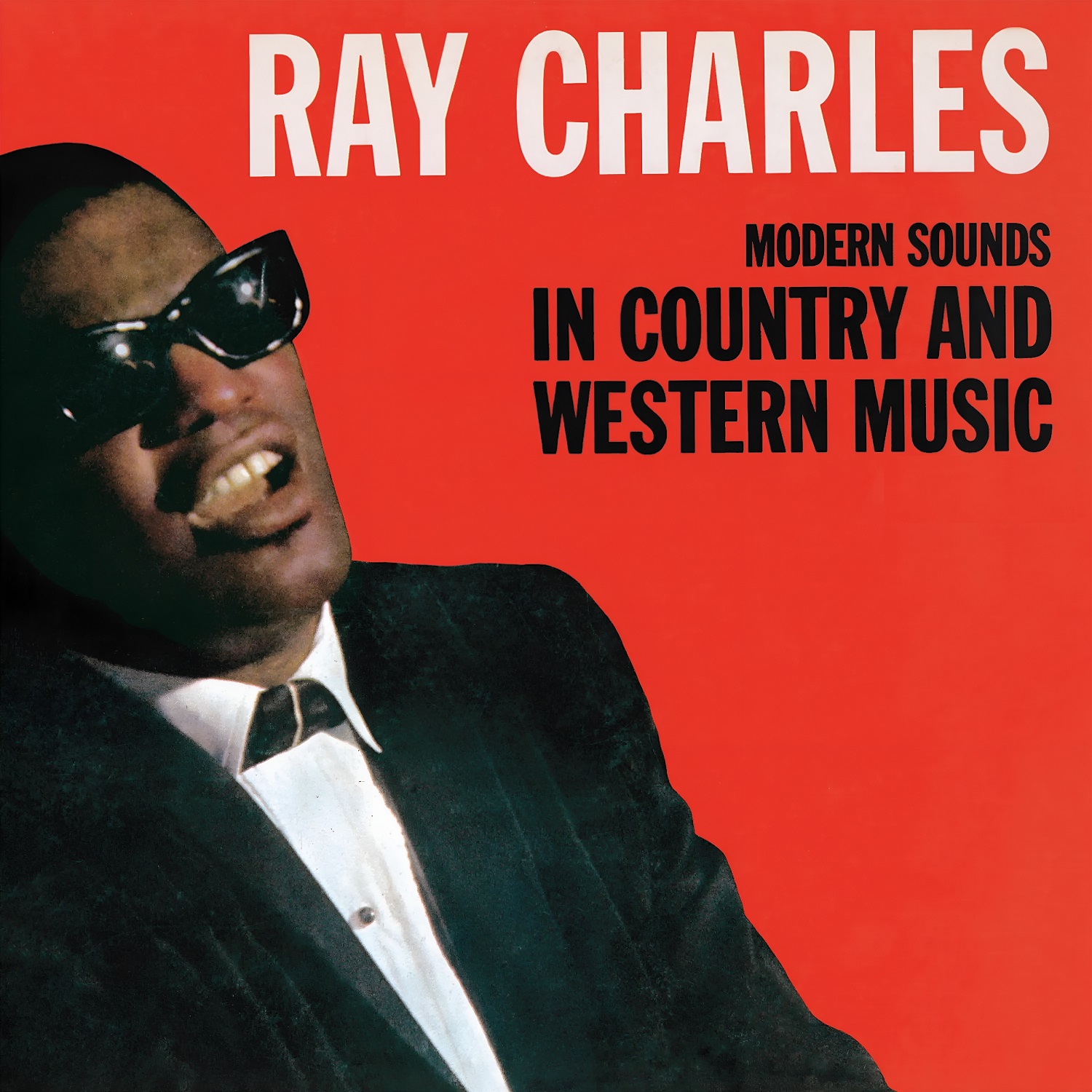
Ray Charles could sing “white” music as well as just about anyone, but to his and everyone else’s benefit, he could never hide the fact that he just sounded “black.” His wonderful singing voice was probably a new flavor to many listeners during his time. Charles’s introduction of blues into a predominately white pop vocabulary opened willing doors that immediately showed the clear direction popular music was going to take in the first half of the sixties.
The prophetically named Modern Sounds in Country and Western Music turned out to be a seminal success that played a huge role in increasing the public interest and development of rhythm & blues and soul music. Ethnic barriers evaporated, no one being able to resist this combination of a fresh, new culture with familiar, approved classics.
Charles makes his purpose known immediately with the stomping “Bye Bye, Love”. Without any guises, this is a straight R&B song. It’s difficult to imagine someone like Frank Sinatra being able to move like this without dislocating his hip. This schedule changes significantly with “You Don’t Know Me”, a traditional string-laden crooning ballad, and it’s the best song on the album because it contains Charles’s deepest, most affecting vocal performance. And in these first two songs we see the things that hold the remainder of Modern Sounds in Country and Western Music back.
First of all, the rhythm & blues on this album is very overstated. We’ve got “Bye Bye, Love,” “Hey Good Lookin’,” and “Just a Little Lovin’ (Will Go a Long Way)” if you’re willing to stretch it a bit. This still makes the album preferable over most pop albums of its time by adding some spice and variety, but it’s spread too far and too thin – two of those songs are the first and last on the album. Since the pop business of this time was cautious of anything too maverick, this isn’t surprising and is still courageous and commendable for its time, but the majority of Modern Sounds is made up of mere traditional pop ballads. Surely they’re aided by Charles’s distinctive voice and a very competent backing band, but most of these compositions just can’t excite anymore through their stylistic familiarity. Take away the voice and they’re by-the-numbers, and even with the voice, other than “You Don’t Know Me,” even Charles sounds like he’s just singing by the book, never emoting heavily and his presence only being felt by his original black tone.
There’s palpable innovation on Modern Sounds in Country and Western Music, but the conservatism of the decade ensures that there’s only a bit of it, and most of the album is underwhelming now. Even more so considering this is the man that wrote “Hit the Road Jack,” “Georgia on My Mind,” “I’ve Got a Woman,” etc. It may be disappointing to hear this, but many would be better served Ray Charles’s legacy through a simple Greatest Hits compilation.
Leave a Reply