




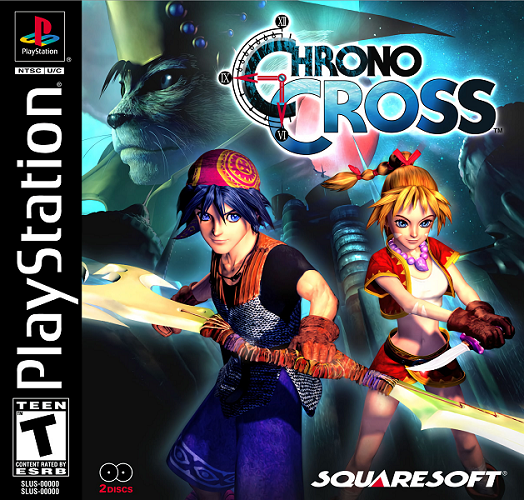
NAME(S): Chrono Cross / クロノ・クロス / Kurono Kurosu
PLATFORM(S): PlayStation
DEVELOPER(S): Square
PUBLISHER(S): Square (Japan) / Square Electronic Arts (North America)
GENRE(S): RPG
RELEASED: November 18, 1999 (Japan) / August 15, 2000 (North America)
RELATED: Chrono Trigger
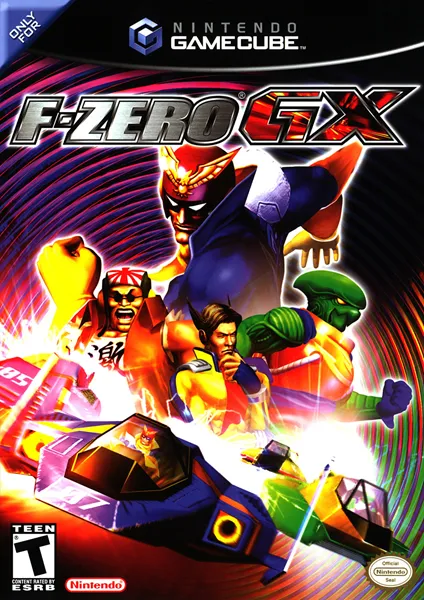
I’m a weird guy who played Chrono Cross long before Chrono Trigger. The reasons were very simple: one, Chrono Cross was far cheaper, with a recent rerelease being about $8 sealed; two, it came highly recommended from a friend of mine. This friend recommended me F-Zero GX and Persona 3. The former is my favorite game of all time, and the latter is close behind. It’s hard to ignore that track record. I was told playing Chrono Trigger first would add a lot to Chrono Cross, but fuck that, I wanted a new RPG to play. By my logic, if it couldn’t hold up without its prequel, it would be symptomatic of other flaws. That turned out to be an accurate prediction, but I’m getting ahead of myself.
I think completing Chrono Cross means I’ve finished every PSX RPG I actually own, which is a fantastic feeling. I got to end the seemingly eternal cycle of making it a bit further in an RPG each time only to drop it and restart later. This book is closed now, and I feel like I just owned myself. Good.
I don’t know where to start with Chrono Cross. Normally, you begin with the plot premise as everything’s built around that in an RPG usually, but summarizing the beginning of Chrono Cross‘ plot makes it look terribly dull. Serge, a silent protagonist, is collecting scales to make a necklace for his childhood friend. He’s suddenly sucked through a wormhole, and appears in a parallel dimension where everything is different (except actually, only some things). In the new world, he is pursued by a group known as the Dragoons for reasons unknown. What follows is practically a series of “why nots,” starting with Serge and friends breaking into the powerful Viper Manor to simply spy on the Dragoons and simply hope they mention why they’re after Serge.
A narrative is composed of many things—or rather, everything. One of those is the plot, which are the reasons given for why things are happening, why they’re relevant, and to what ends. Chrono Cross‘s plot is extremely weak, because these reasons are repeatedly obfuscated and dangled in front of the player like a carrot on a stick until the very final couple of gameplay hours. Except it’s not really a carrot; it’s more like nothing, because the player is never given enough information or understanding about the world to care about the possible answers they’re searching for.
Empathizing with the player characters and their reasons for wanting these answers is difficult, because the only universally important characters still don’t have much agency. Serge is silent and unemotive, and Kid is routinely absent and only gains relevance in the aforementioned final act. The remaining characters have little stake in the big picture, many of them seemingly only joining you because they’re bored, and don’t receive much character development, because doing that for 45 characters would be too much for the developers.
While the plot of Chrono Cross failed to convince me to keep playing, the lore was enough, most of the time. There’s a ton of controversy over the huge number of party members, but I liked the great amount of choice it gave me on how to play, and I was therefore willing to overlook some of the problems with balancing the cast’s relevance. If anything, it was this large cast that ending up saving Chrono Cross‘ narrative.
Each character’s story is mostly independent of the ambiguous, thin, main plot, and thus work fine on their own. Their motivations are initially clear, the character’s role in the world is set up, and there is still work to be done with many of them when it comes to finishing their side story in addition to the main quest. It’s far easier to care about these character stories, brief as they are, than the main plot. Caring about the characters also means caring about the battles more, as you choose which of your favorite characters will be a part of your team. The times when character stories intersect with the main story allow you to actually find a path to be hooked into the latter. Chrono Cross‘s plot is weak, but its sense of lore is mostly excellent.
I am reminded of Chrono Trigger in how many characters and events relate to each other in very unsuspecting but pleasing ways. It gives the narrative a sort of circular nature that comes just as natural to the parallel worlds as it does to Chrono Trigger‘s time travel story. Yet, if Chrono Trigger is an ideal example of how to handle exposition, then Chrono Cross is the worst example. Perhaps Trigger is given an unfair advantage with its time travel mechanic allowing you to experience all of its lore first-hand and have some sort of involvement with it, but Chrono Cross doesn’t fail solely by not having that benefit.
Chrono Cross‘ reputation of having almost all of the plot within the last few hours is well-deserved, and even when it arrives, its revelations are intricate but poorly presented. I feel as if I’m supposed to applaud how successfully convoluted it is, but I’m not impressed, because I simply don’t care and was never given a reason to care in the last 30 hours I spent playing. Chrono Cross starts throwing around hugely important terms like “Dinopolis” that it tells us are truly the framework of everything we just experienced, but all this detail is so indirect from what we were feeling the vast majority of the game, that it doesn’t feel truly personal or important.
It wasn’t actually a part of what we were playing until we were too far past it, and its influence in hindsight was so distant—long stories of time periods, dimensions, and people we never saw—that it doesn’t work in an interesting, revelatory aspect either. It’s all quite underwhelming, and for all its hype, I found myself enjoying Chrono Cross the least in its last few hours, leaving me on a sour note that is ultimately deciding the tone of this review.
The logic behind Chrono Cross‘ parallel dimensions is also not as consistent and impressive as Chrono Trigger‘s time travel. It’s entirely arbitrary what actions in one world affect that in another and what changes, and in what ways they change. The mostly unflinching settings are also not very convincing. Arni Village in one world has mostly completely different people, people living “opposite” (or not really opposite, it’s arbitrary) lives, and in some cases areas have different backgrounds, but they mostly look exactly the same and don’t reflect that? The worlds’ relation to each other isn’t strictly defined, so I found it uninteresting. They’re just two of the same board with different game pieces over them generally doing their own things independent of one another.
That aspect aside though, the natural settings of Chrono Cross are lovely. This is a very easy contender for the best-looking game of its generation. Chrono Trigger was a great-looking game itself, but only Chrono Cross looks so good that it’s just a mere jump away from next-generation graphics. It’s gorgeously detailed, and while the pre-rendered backgrounds aren’t as eye-catching or rewarding of examination as well as Final Fantasy IX‘s, the 3D models are the console’s peak; incredibly smooth, with any polygons barely being forced to stick out because of console limitations.
It says good things about Chrono Cross—one of a million JRPGs to place a story emphasis on colorful, natural elements—that the balance between them is felt in the colorful world itself. This is a gorgeous game to look at, and several times I had to remind myself of just how incredibly done everything is because it obviously looking like a PlayStation game is deceptive as to how far ahead of the rest of the library it is. The framerate is impressive throughout as far as I can tell (my emulator had some natural problems handling some areas), but this doesn’t do much to highlight how unanimated Chrono Cross is. Character models don’t really move around or emote much, which is disappointing when compared to the last two Final Fantasy games on the console.
Let this critique follow into what is one of the few disappointing aspects of Chrono Cross‘ largely improved combat system. Chrono Cross, like Chrono Trigger, has no random battles and they’re all contextualized on the field, but Chrono Cross does this in a very plain way: just bump into the monster, and get into a random arrangement of enemies on a pre-set battle background. Chrono Trigger did something good by making its battles pre-ordained but delivered through events that made the encounters actually seem like natural encounters and not pocket dimension trials.
In Chrono Trigger, monsters can be seen actually doing things on the field other than walking, and you can interrupt them on their own time, thus triggering their aggression, or battles would be started on their terms in other interesting ways, such as an early part in the game where birds fly by and drop enemies in front of you. Chrono Trigger also had dynamic battle animations where characters would move around, similar to how they would in a real fight, which Chrono Cross could’ve still kept without having to change its battle or encounter system at all.
These are aesthetic things that let the player create a narrative out of battles and exploring, and nothing needs to be compromised for them to be in Chrono Cross as well. I can only assume they didn’t want to put in the effort with 3D models, but it further goes to show how Chrono Cross is not a particularly animated game, while its sequel was. There was no benefit gained from this decision.
As an aside I can’t fit anywhere else, it’s extremely irritating Chrono Cross‘ case advertises “no random battles,” but makes them just as interruptive. Chrono Cross‘ battle speed is naturally slower than Trigger‘s, and it’s further slowed down by having a traditional pre-battle intro and post-battle screen that Trigger didn’t have. This introduces a desire to avoid battles that I didn’t really have in Trigger, and while enemies on the field would ideally be good for choosing fights, Chrono Cross‘ dungeon corridors are so narrow that avoiding enemies is never going to happen nearly as much as you try to, and on top of that, Chrono Cross regenerates enemies on maps at random and far too often. I think Chrono Trigger would also regenerate enemies on the field over time, but the fact I can’t remember says enough about the difference between them.
Two more problems come up when Chrono Cross barely rewards you for winning random battles because there’s no experience points, further making you want to avoid them, and the fact that because hit chances are mostly static, battles against old enemies can still drag on excessively with neither side doing any damage to each other. You will have the same chance to hit an enemy from the first area as you do in the final, so it’s debatable how much time you’re saving by being any stronger, unlike in other RPGs.
Finally, since Chrono Cross offers infinite healing through Elements after battles, there’s no resource conservation like there is in most RPGs, so battles become very tedious and never increasingly difficult. You end each one as strong as before you started, so if you’ve beaten a pre-set group of enemies once, you can certainly beat them again. This would go hand in hand with the no random battles if a group of enemies de-spawned permanently after beating them once, but we already know that’s not the case, so they actually work against each other.
Chrono Cross‘ battle system itself is fantastic by the standards of its own genre. It succeeds by the simple merit of actually encouraging the use of every aspect of its battle system. For example, area-of-effect attacks in CT didn’t add as much as they could’ve, because you had almost no control over positioning. That was that game’s main combat gimmick. CC has the combo system, Elements, and field effects. It’s more to keep track of, but they’re decently balanced and connected; you have to sacrifice hit chance for stronger attacks, but stronger attacks refill the magic gauge more.
Magic gives field control and thus even stronger attacks, but when used too soon after charging with attacks, it makes you wait on your turn. Most good battle systems are built around checks and balances like this, but really it’d just be bittersweet if they aren’t considered in battle because the game were too easy to demand it, or some sacrifice was unbalanced compared to the gain.
Chrono Cross‘ random battles are too easy despite being long as hell, but mastering everything mentioned above still aids in finishing battles faster and continuing with your adventure, as opposed to how in many RPGs you could just do standard attacks and carry on. You can here, too, but it often takes longer, so you’re usually encouraged to still play the way the game wants you to. It keeps things a modicum of satisfying where the difficulty doesn’t, because there’s still a challenge and fun to be had in finishing battles as quickly as possible.
I like turn skipping to keep your most important players recovering stamina, while not giving the enemy too many counter attacks, too. It’s a bit too abusable, since in these situations I always neglect a third party member, as a full combo will refresh the other’s, so the weakest is left out, but it’s a good idea.
I also take issue with how high the chance is for an initial strong hit. It’s so far above 50% that it only makes sense to choose fierce attacks most of the time because they can deal critical hits, refill magic the most, and will most likely hit and kill the enemy faster. They’re too strong in comparison to weak and medium hits, but even those aren’t totally useless, especially in some of the more challenging boss battles, where Chrono Cross‘ combat reaches its full potential, and an emphasis on defensive play and speed occurs, making all party members relevant. I’ve had to think in Chrono Cross more than 90% of JRPGs, and even if the parts where they forced a high level of thinking were too few, understanding the battle system was still to my benefit when getting through random battles.
Brace yourself: I think Yasunori Mitsuda is a somewhat overrated composer. He again shows his mastery in Chrono Cross of writing instrumentally diverse, pleasant background music that’s ambitious but unmemorable. Yeah, it’s just my opinion, but deal with it. In other words, he services the game world perfectly, but doesn’t transcend it on its own merits. The random battle music is annoying as shit and just makes the tedium of them more aggravating, and it’s pretty messed up to make your worst song the one you hear the most. The title screen music is great, I like the boss themes, and Guldove’s and Another World’s map themes.
This review sounds more negative than how I actually feel overall. What’s a true testament towards Chrono Cross‘ quality is that while I was enjoying myself the most (i.e. before the final areas), I flopped between the game being about as good as Chrono Trigger or better. Many of my criticisms are to do with comparisons to its predecessor, which is somewhat of an unfair height to compare it to. I say somewhat, because while Chrono Cross is best enjoyed as a stand-alone game with its own values, this is pretty much impossible due to its duty to be a sequel, which ends up being kind of forced, and does it a disservice by inviting comparison to a fairly different game.
Though some potential is squandered in its ambitious narrative while Chrono Trigger was able to reach all of its own, Chrono Cross surpasses it in captivating visuals, some great battles, and many fun, unique characters. If enjoying narratives with a heavy emphasis on setting is the appeal of RPGs in general, then I’d say Chrono Cross hits the most important spots very well. Oddly, Chrono Cross is at its best when it’s at its closest to Chrono Trigger: not taking itself too seriously.
Leave a Reply